Having recently arrived in Spain, a few days ago I excitedly brought home a whole Jamón Serrano from the supermarket, ready to enjoy “ham freedom” at home. But when I carefully opened the packaging and examined it, I noticed some tiny black dots on the lean meat and fat layers, and I instantly worried: Could this be mold? Such an expensive product—was it wasted?
I’m sure many friends have had similar doubts. Don’t panic, as this is actually a very common phenomenon. These tiny black spots, in most cases, are not a problem at all; in fact, they are a quality symbol formed during the long curing process of the ham! In Spain, they are called “Puntitos negros” or “Cristales de tirosina,” meaning tyrosine crystals.
Simply put, tyrosine is an amino acid, a basic building block of proteins. During the long and complex curing and drying process of Spanish ham, proteins gradually break down, and these tyrosine molecules crystallize and precipitate, forming visible white or black small hard spots. So, seeing these little dots indicates that the ham has been fully matured and its flavor substances have settled well. They are completely harmless and can be eaten directly; sometimes they even have a slight granular texture similar to aged cheese.
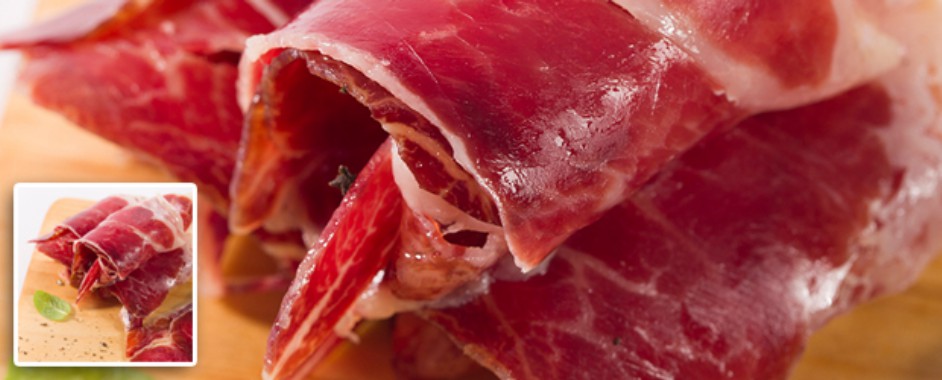
How to Distinguish Tyrosine Crystals from Mold?
Nothing is absolute, so we must learn to differentiate them from real mold. After all, if black cloak Spanish ham is stored improperly, the ham surface can indeed develop mold, as seen in the case of Spanish ham black industry. The table below can help you quickly tell the difference:
| Feature | Tyrosine Crystals | Mold |
|---|
| Color | Usually white, off-white, or small black hard spots | Usually green, blue, black, or white fuzzy patches |
| Texture | Hard, like small sand grains, embedded in muscle fibers | Soft, powdery or filamentous, attached to the ham surface |
| Distribution | Randomly scattered on lean meat parts, irregular | Usually appears in patches, especially on moist or cut surfaces |
| Smell | No special odor | Noticeable moldy or rancid smell |
If what you see are small hard spots embedded in the meat, with no odor, feel free to eat confidently! But if you notice fuzzy patches on the surface with an off smell, be cautious. Small areas of surface mold can be wiped off with a clean cloth dipped in olive oil, then cut about one centimeter around it; but if the mold covers a large area or has penetrated inside, for health reasons, discard it decisively.
I hope this post helps everyone so that the next time you encounter black spots on your ham, you won’t scare yourself unnecessarily!
