New to Spain, it feels like everyone is talking about Jamón — truly the soul of this country. But every time I go to the supermarket, looking at rows of hams like Serrano, Ibérico, Cebo, Bellota… it’s honestly overwhelming, and the prices vary wildly. As a food lover who doesn’t want to waste money, after some research and trial and error tasting, today I want to share with you how to buy ham with the best value for money!
How to Choose? Serrano vs Ibérico
We need to understand the two main categories: Serrano ham and Ibérico ham. Simply put, they come from two completely different pig breeds, with vastly different tastes and prices. To sum it up in one sentence: Serrano is everyday fare, Ibérico is a top-tier indulgence.
To make it clearer, I’ve prepared a simple comparison table:
| Feature | Serrano Ham | Ibérico Ham |
|---|
| Pig Breed | Ordinary white pig | Iberian black-hoof pig |
| Feeding | Mainly grain feed | Graded, best level fed on acorns |
| Drying Time | Usually 12-18 months | At least 24 months, can be over 48 months |
| Taste | Salty, firmer texture | Rich and fragrant, melts in your mouth |
| Price | Affordable, suits most people | Expensive, premium ingredient |
How to Get the Best Value for Money?
Having understood the categories, let’s talk about the core: value for money. There are several purchasing options for ham: buying a whole leg, boneless chunks, or pre-sliced packages.
Value for money ranking: whole leg > boneless chunks > sliced packages
Buying a whole leg is the cheapest per unit, but you need a ham stand and a knife and some slicing skills. If your household consumption is slow, it may dry out over time. This option suits family gatherings or those who consume frequently.
Sliced packages are the most convenient, ready to eat immediately, but also the most expensive—prices can be Spanish ham cost-effective two to three times higher than whole legs. Perfect for occasional tasters or those who prefer convenience.
Boneless chunks are, in my opinion, the best value choice. They are much cheaper than sliced packages and don’t require slicing skills or tools as whole legs do. You can buy a small piece, use a regular knife or have the butcher’s machine slice it, and they’re easier to store.
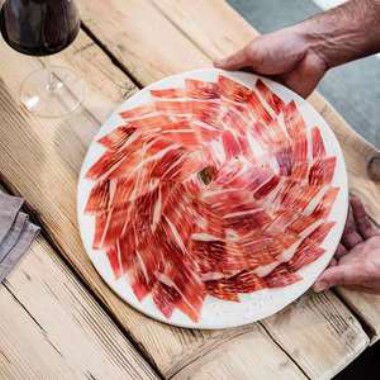
So, my recommendation is: if Spanish ham value for money is just for pairing with bread or drinks daily, buying a good-quality Jamón Serrano Gran Reserva or Jamón de Cebo Ibérico boneless chunk is very cost-effective. The former is the top level among Serrano hams, the latter is the entry-level Ibérico, both moderately priced but far more flavorful than regular Serrano.
As for the premium Jamón de Bellota 100% Ibérico, it is definitely the pinnacle of deliciousness, but the price is also quite “elegant.” Personally, I think it’s best reserved for special occasions or holidays, bought in small pre-sliced packages to enjoy slowly with a good wine—that’s the true way to appreciate it. What types of ham do you usually buy? Any pitfalls or bargain tips? Feel free to share your experiences below!
