A while ago, a friend gifted me a whole bone-in Spanish ham, a huge one with the hoof, the iconic Jamón! When it arrived, I was beyond excited, feeling like I instantly owned one of Spain’s greatest treasures. But once the excitement faded, the question arose: how on earth do you actually eat this thing? Looking at it, we were clueless and didn’t know where to start. After some research and practice, I finally developed a reliable procedure and I’m sharing it today, hoping to help fellow enthusiasts who share the same “pleasant dilemma”!
Step One: Preparation, create a ritual!
To elegantly handle a whole ham, the right tools are essential. It’s not something any random kitchen knife can do. You need at least two key items:
- Ham Stand : This is a must-have! It holds the ham firmly so it doesn’t wobble while slicing, ensuring safety and beautifully thin slices.
- Ham Knife : A very long, flexible specialized knife, perfect for slicing translucent thin pieces. Usually, a set also includes a shorter boning knife and a wide blade knife for removing skin and fat.
Don’t hesitate to invest in good tools; they can elevate your ham experience by several levels.
Step Two: Opening the leg and slicing, the skillful part
Once the ham is fixed in place, you can start “opening the leg.” First, use the wide blade knife to cut away the outer yellow fat layer and the hard rind that tastes unpleasant. Remember, don’t remove too much at once, just clean the area you plan to eat that day. The remaining fat protects the ham inside from drying out.
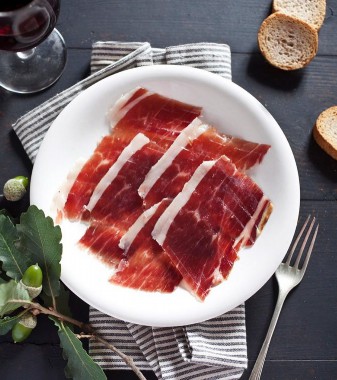
Next comes the exciting slicing! Use your long ham knife, keep it horizontal, wrist-powered, gently and parallelly shave very thin slices of ham. The goal is slices as thin as a cicada’s wing, transparent enough to see through! It takes some practice, but don’t worry, you’ll get it after a few tries.
Step Three: Savor different parts’ flavors
The most fascinating thing about a whole ham is that each part has completely distinct flavors and textures. Let’s see it in a clear table:
| Part | Characteristics | Recommended Way to Eat |
|---|
| Maza | Marbled with fat, juicy, richest flavor | Enjoy directly, paired with French baguette or Picos |
| Contramaza | Leaner, firmer texture, intense flavor | Pair with red wine, use in Tapas |
| Babilla | Least fatty, firmer, lean | Cut into ultra-thin slices, serve with melon or figs |
| Punta | Highest fat content, most salty and rich | Perfect for strong taste lovers, or chop finely to flavor dishes |
Step Four: What if you can’t finish it all? Proper storage method
Unless you’re hosting a party, finishing a whole ham at once is impossible. Storage becomes key. Important: never put it in the fridge! Low temperature damages the ham’s flavor and fat structure.
The right way is: cover the freshly sliced clean white fat pieces back on the cut surface, like tucking it in a little blanket, to lock in moisture. Then cover the entire cut area and ham with cling film or a clean cotton cloth, and store in a cool, ventilated, dry place. It can stay good for months at room temperature!
That’s it for today’s share about a whole Spanish ham. Handling a whole ham may sound complicated but it’s truly fun. Hope this post helps everyone! How do you eat your ham? Any unique tips or pitfalls to avoid? Feel free to leave comments and share below!
