Friends new to Spain often see “Jamón” and “Prosciutto” in supermarkets or on restaurant menus. Both look like thin, red slices of meat, so many people assume they are similar or even call Italian Parma ham Spanish ham. Actually, although these two are both top names in European ham, they differ greatly in pig breed, production process, and final taste! Today, let’s dive into the real differences between these two premium hams.
The Root Difference: Pig Breed and Cut
First, let’s start at the source. Spanish ham uses the pig’s hind leg. There are mainly two types: one is made from our familiar Iberian black-hoof pig called Jamón Ibérico, which is top-quality; the other is made from white pigs and called Jamón Serrano, a more everyday choice. Italian Parma ham also uses the pig’s hind leg but from a designated Italian large white pig breed such as Duroc. So next time you see a ham with a black hoof, you can basically confirm it’s Spanish Iberian ham—this is one of the most straightforward distinctions.
A Flavor and Craftsmanship Comparison
Both are dry-cured hams, but the details shape their flavor profiles. Spanish ham uses pure sea salt for dry curing, then it hangs to age slowly through natural air drying. Especially the top-grade Iberian acorn-fed ham, aged up to 36 months or longer, boasts a complex, rich flavor with unique nutty aromas; its fat melts on the tongue leaving a lingering finish. Parma ham uses less salt and matures between 12 to 24 months, resulting in a sweeter, more tender, and moist texture with a fresher, more straightforward flavor featuring subtle fruity and meaty notes without being overpowering.
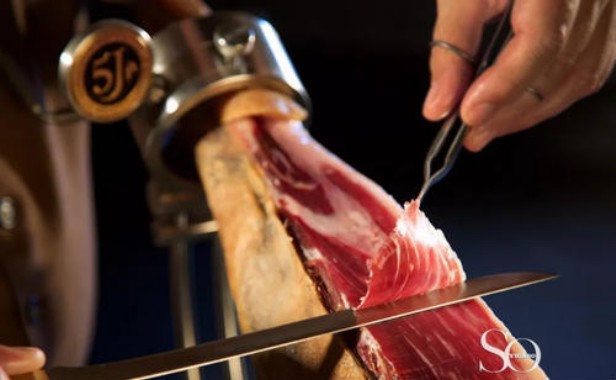
To make it clearer, here’s a simple comparison table:
| Feature | Spanish Ham | Parma Ham |
|---|
| Origin | All over Spain | Parma region, Italy |
| Pig Breed | Iberian black pig or Serrano white pig | Specific local Italian white pig breeds |
| Texture | Salty, rich, complex layers, oily and sweet | Moist, sweeter flavor, soft meat |
| Color | Darker shades, deep red to purple-red | Lighter pink with white fat |
| Markings | Black hoof, V-shaped cut | Crown brand mark |
So which should you pick? It depends totally on personal taste and occasion. If you want an intense experience that redefines your idea of ham with powerful flavors and nutty aroma, you have to try Jamón Ibérico de Bellota. Though pricey, it’s absolutely worth it. If you want a ham just for appetizers paired with melon, figs, or tossed in salads and pizzas, then the sweeter, softer Parma ham is an excellent choice with great value. Personally, I prefer Spanish ham eaten plain, but Parma ham is more versatile when paired with other foods.
After all this, both are delicious delicacies with no clear winner—just different preferences. What about you? Which do you prefer? Or do you have any secret recipes or favorite brands? Feel free to share in the comment section!
