Hi everyone! Last weekend I finally decided to bring home a whole Jamón Serrano from the supermarket to enjoy true “ham freedom”! But when I opened the package, I was a bit shocked to see a thick layer of yellowish fat covering the outside, and it even had a strange smell. I want to ask the veterans: is this fat normal? Can it be eaten or should it be cut off and discarded? It feels wasteful to just throw it away!
What Exactly Is That Yellow Fat Layer?
Don’t worry, this yellowish fat layer is completely normal. In Spanish, the fat part of the ham is collectively called “tocino.” The yellowed part you see is fat on the outermost layer of the ham that has oxidized due to long exposure to air and light during the curing process. This oxidized fat has a characteristic rancid taste and bitter sensation, so it is not recommended to consume it directly. It acts like a natural protective shell, preserving the ham meat and the fresh fat inside.
Proper Handling of the Outer Fat Layer
So before you start slicing the ham to enjoy its flavor, the first step is to cut away this yellow, oxidized fat layer. You only need to trim a thin layer until you reveal the clean, snow-white fat and the vibrant red lean meat underneath. Be careful not to cut too much because the white fat right next to the lean meat is a treasure! It allows the ham slices to melt in your mouth and brings out rich nutty aromas — the essence of Jamón. When slicing the ham, make sure to balance fat and lean for the ultimate taste experience!
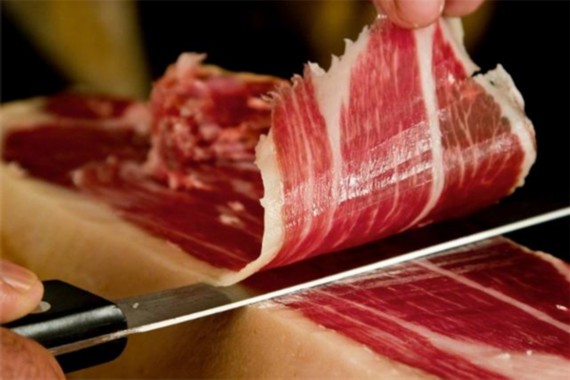
Now, about Spanish ham mold issues, does the trimmed fat have to be discarded entirely? Not necessarily! The oxidized yellow part is indeed useless and should be thrown away. But if you trim off some fresh, white fat, don’t waste it — it has many uses in the kitchen. Here’s a handy table:
| Use | Method |
|---|
| Rendering fat for cooking | Slowly melt the white fat cubes over low heat to produce lard, perfect for frying eggs or roasting potatoes with incredible aroma! |
| Enhancing soups | Spaniards often toss some pieces into lentil or chickpea stews, instantly elevating the flavor. |
| Natural preservation | This is the most authentic method! After slicing the ham, cover the cut surface with the large pieces of freshly trimmed white fat to effectively prevent the ham from drying out. |
Remember the simple rule: discard yellow, keep white. Yellow is oxidized, bad fat; white is fragrant, good fat. I hope this little guide helps those just starting to handle whole Jamón legs. If anyone has other secret tips for dealing with ham fat, feel free to share in the comments below!
