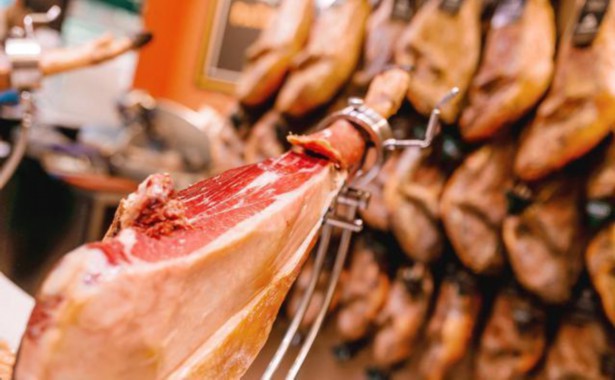
For those who have just arrived in Spain, are you like me when I first came—walking into a supermarket or a Tapas bar, seeing rows of hanging ham legs, drooling yet feeling a little confused? Especially when friends mention Italy’s Prosciutto, it can be really puzzling. Jamón and Prosciutto look quite similar, but what exactly is the difference? Today, let’s break it down so that after reading this, you’ll be able to speak confidently at the dining table!
Let’s talk about Spain’s national treasure—Jamón. Simply put, Jamón is the general term for Spanish cured ham. It mainly divides into two types: one is the more affordable Jamón Serrano, made from regular white pigs; the other is the premium Jamón Ibérico, which must use purebred Iberian black-hoofed pigs. Especially the highest grade, Bellota, where pigs feed on acorns in oak forests—the flavor is simply exceptional! Spaniards are meticulous about Jamón production: it is first cured with sea salt and then aged for a long time in the dry Mediterranean climate. This process gives it a firm texture, savory saltiness, and rich, unique taste.
Next, let’s look at Italy’s contender—Prosciutto. The most familiar might be Prosciutto di Parma. The Italian ham-making process differs somewhat from Spain’s: less salt is used, and the aging environment tends to be more humid. This results in Prosciutto having a softer, moister texture and even a hint of sweetness. Its color is pinker, with evenly distributed fat, and the slices are paper-thin and melt in your mouth.
After all this, you might still feel a bit overwhelmed. Don’t worry—here’s the essential information!
Ultimate Showdown: Jamón vs. Prosciutto
| Feature | Spanish Jamón | Italian Prosciutto |
|---|
| Pig breed | Mainly Iberian black pigs or white pigs | Specific breeds of white pigs |
| Production | Cured with sea salt, dried in a dry climate | Less salt, matured in a humid environment |
| Texture | Firmer texture, intense flavor, nutty aroma | Softer, moister, with a mildly salty-sweet taste |
| Appearance | Darker red color, less but flavorful fat | Pinker color, more evenly distributed fat |
| Serving | Thick hand-cut slices at room temperature, eaten alone or with bread | Thinly sliced, usually paired with melon or cheese |
So, as summarized in Italian ham vs. Spanish ham, the gist is this: If you like strong, savory flavors with a chewy texture, go for Jamón; if you prefer tender, sweet, melt-in-your-mouth slices, choose Prosciutto.
At the end of the day, neither ham is absolutely better—they are products of their terroir and craft, representing two distinct culinary philosophies. Personally, I’m a die-hard fan of Jamón Ibérico, especially enchanted by that acorn aroma that melts in your mouth, even though purchasing it always costs me a fortune… but the satisfaction is irreplaceable!
Are you on Team “Jamón” or Team “Prosciutto”? Or do you have any favorite brands or ways to enjoy them? Feel free to share in the comments!
