For those newly arrived in Spain, do you often feel puzzled when facing the ham section in supermarkets? You see the dazzling array of Jamón, but right beside it is a similar-looking yet smaller one called Paleta, priced much cheaper, which makes you wonder: what’s the difference between these two? Is the cheaper one less tasty? Today, speaking as someone who has tasted plenty of ham, let’s talk about this often overlooked “little brother” — the Spanish ham front leg.
Simply put, Paleta is the pig’s front leg, while what we usually call Jamón is the pig’s hind leg. Because it’s the front leg, its size is noticeably smaller than the hind leg, and bones take up a larger proportion, so there is relatively less meat. The fat distribution is also different from the hind leg, usually with a thicker outer layer of fat. Check out the image below, where the left is Paleta and the right is Jamón — the size difference is quite obvious.
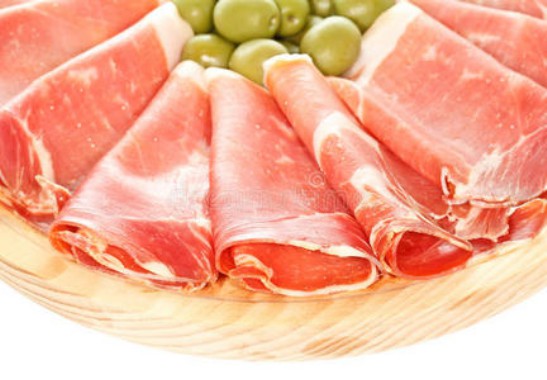
Now to the key point: how does it taste? Since Paleta is smaller and thinner, its curing and drying time is shorter than Jamón. The direct consequence is that Paleta’s flavor is often more “intense” and “bold”. You will clearly notice its saltiness is higher, and the texture of the meat fibers can be stronger as well, as seen in this Spanish ham front leg slices. For lovers of strong flavors, this punch might be exactly what they want! Its aroma is also very rich, especially in the meat near the bone, which tastes incredible. However, the flavor complexity of Paleta may not match that of well-aged Jamón in delicacy and refinement, as shown in this Spanish ham front leg part.
Front Leg vs. Hind Leg at a Glance
To make it clearer, here is a simple comparison table:
| Feature | Front Leg | Hind Leg |
|---|
| Part | Pig’s front leg | Pig’s hind leg |
| Weight | Usually 4-6 kg | Usually 7-9 kg |
| Curing Time | Shorter | Longer |
| Flavor Profile | More intense, direct, slightly saltier | More complex, mellow, long finish |
| Slicing Difficulty | Slightly harder due to bone structure | Relatively regular, easier |
| Price | More affordable | Higher price |
So, Should You Buy Paleta?
My advice is: Absolutely worth trying! Especially for everyday family consumption, Paleta is simply the king of cost-effectiveness. You spend less money but can still enjoy authentic Iberian flavors. If you’re trying to slice a whole leg for the first time, choosing Paleta causes less worry, since the loss is smaller if you cut it badly. Usually paired with melon, stuffed into a baguette, or served as a small tapas dish, Paleta’s rich flavor can fully satisfy. If you are pursuing the melt-in-your-mouth sensation and layers of aroma that progress on your palate, then selecting a high-aged Jamón is the way to go.
Paleta and Jamón are not simply “better” or “worse” but more like brothers, each with its own character. Paleta, with its bold flavor and excellent value, is very common on tables across Spain. So next time, don’t hesitate — boldly buy a piece of Paleta to try! Also, feel free to leave comments below sharing whether you prefer the front leg or the hind leg’s flavor?
