When I first arrived in Spain, I thought ham was just salted meat. But the first time I tasted a friend’s Jamón Ibérico de Bellota, the melting fat and rich nutty aroma completely changed my perception! From then on, my wallet was doomed… Later, as I learned more, I realized there is a vast knowledge behind a thin slice of ham. Today, let me share with you how the irresistible flavor of Spanish ham is created.
1. Genetic Gift: The Pig Breed Is the Foundation
First and foremost, the pig breed is fundamental. Spanish ham mainly falls into two categories: Jamón Serrano and Jamón Ibérico. The former uses ordinary white pigs, which have high yield, affordable prices, and relatively straightforward flavor. The latter, known as a “national treasure,” must come from Iberian black-hoofed pigs with at least 50% Iberian bloodline. These pigs naturally possess the ability to infiltrate fat into muscle fibers, creating beautiful marbling, which is key to their oily, melt-in-the-mouth texture.
2. Soul Infusion: Feeding Methods Determine the Flavor Ceiling
If breed sets the baseline, feeding methods define the upper limit of flavor, especially for Jamón Ibérico. Depending on the pigs’ diet in the last few months before slaughter, there are three grades with vastly different prices and flavors:
| Grade | Feeding Method | Flavor Characteristics |
|---|
| Bellota | Free-range, acorns and pasture | Clear fat, rich nutty aroma, long-lasting finish |
| Cebo de Campo | Free-range, grains and pasture | Richer flavor with earthy notes |
| Cebo | Confined, grain-only feed | Relatively simple flavor, heavier fat sensation |
3. The Magic of Time: The Art of Curing and Drying
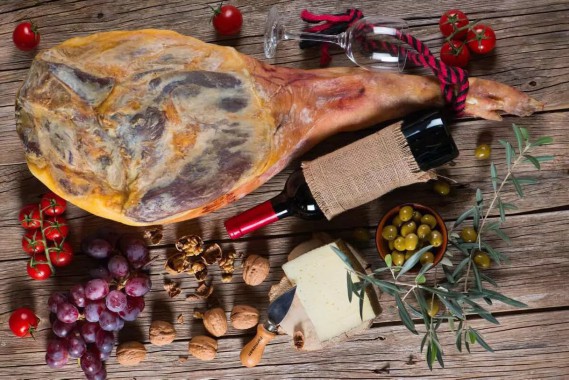
With premium raw materials in hand, it’s time for patience to work its magic. Fresh hind legs are first dehydrated with sea salt, then transferred to natural storage cellars for lengthy curing and drying. During this process, the proteins and fats inside the ham undergo fascinating breakdown and transformation, producing hundreds of complex aromatic compounds. Subtle changes in temperature and humidity affect the final flavor. This process takes anywhere from just one year to four or five years! It is precisely this Spanish ham name origin of long and patient waiting that creates the ham’s rich and profound unique flavor.
Therefore, the source of Spain’s top-quality ham claims that a slice of premium Spanish ham is a crystallization of perfect timing, favorable conditions, and craftsmanship. From the pig’s lineage, to every acorn it eats, to the artisans’ long and careful wait—each step is crucial. When you buy ham, do you pay special attention to these labels? Or do you have any tips or stories about hidden gems or pitfalls? Feel free to share your thoughts in the comments below!
