Every time I go to the supermarket after arriving in Spain, seeing those spectacular rows of ham legs makes me feel overwhelmed by choices. Black pig, white pig, with hoof, without hoof, prices ranging from tens to hundreds of euros—what is the real difference? Recently, after chatting with a local gourmet friend, I finally got a clearer idea. Today, I’d like to share it with you in hopes of helping fellow confused newcomers.
First, distinguish two main camps: Iberian vs. Serrano
First of all, you should know that Spanish ham mainly divides into two categories: Jamón Ibérico and Jamón Serrano. Simply put, the former is the “noble” choice, while the latter is the “common” one. Iberian ham is made from Spain’s special black-hoofed pigs, with limited production and rich flavor; Serrano ham comes from common white pigs and is a staple on Spanish dining tables. The differences are clear in this table:
| Feature | Jamón Ibérico | Jamón Serrano |
|---|
| Breed | Iberian black-hoofed pig | Common white pig |
| Rearing | Free-range, eats acorns/grains | Farmed, eats feed |
| Flavor | Rich in fat, melts in your mouth, nutty aroma | More salty taste, drier texture |
| Price | Expensive | Affordable |
The “Black, White, Red, Green” grading of Iberian ham
After understanding the main categories, let’s look at the internal grading of the original Spanish cured ham “noble” Iberian ham. Just recognize the color of the plastic tag hanging on the leg, which is a legal standard and cannot be faked!
- Black tag: Top level! 100% purebred Iberian black pig, free-range on acorns. This is truly the pinnacle of ham.
- Red tag: Crossbred Iberian pig, free-range on acorns. Also excellent quality, a great value choice.
- Green tag: Crossbred or purebred Iberian pig, but feeding mainly grains and grass outdoors.
- White tag: Crossbred or purebred Iberian pig, farmed, fed on grain feed. This is the entry-level within the original Spanish imported ham Iberian ham category.
Authentic ways to enjoy ham and some tips
The best ham must be eaten freshly sliced. Vacuum-packed slices are convenient but lose a lot of the flavor. Remember, don’t cook high-quality Iberian ham like stir-fry or soup—that’s a waste! Pair it with melon; Spaniards prefer eating it directly, or with a small piece of toasted bread, letting the fat melt slowly in your mouth.
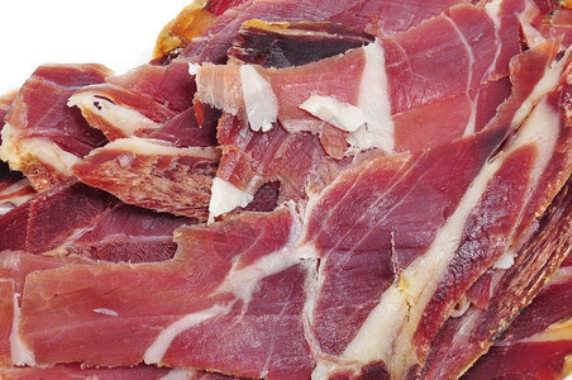
A good slice of ham should be as thin as a cicada’s wing and show marbled fat patterns. The moment it touches your tongue, the savory saltiness and nutty fragrance will definitely make you feel it’s worth every penny.
After saying so much, the most important thing is to try it yourself. Visit a market or a ham specialty shop first, ask the expert to slice a few pieces from different grades to taste, and find your favorite flavor. Where do you usually buy your ham? Any secret favorite shops or brands to recommend? Feel free to leave your comments below for discussion!
