Hi everyone! For friends who just arrived in Spain, do you often find yourself staring in awe at those rows of shiny, large hanging hams every time you visit the supermarket or market? You must be wondering: Spanish ham is so famous, what animal’s meat is it actually made from? Let’s talk about this today, and by the end you’ll definitely understand!
The answer: most of the Spanish ham we talk about is made from the pork hind leg, cured and air-dried. Yes, you got it right – it’s pork! By the way, ham made from the pig’s front leg is generally called “Paleta,” which is smaller than the hind leg “Jamón” and usually a bit cheaper. So next time you see these two terms, you’ll know the difference between front and hind legs.
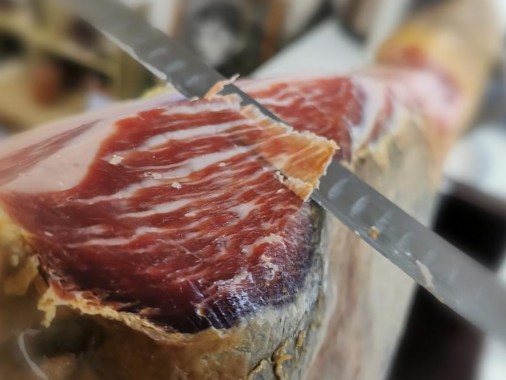
The Two Main Types of Ham: Serrano vs. Ibérico
All Spanish ham is called Jamón, but the difference is huge. It mainly divides into two categories, and understanding these two gets you started.
Jamón Serrano
This is the most common, budget-friendly “people’s ham.” Basically, most affordable hams you see in supermarkets are this type. It’s made from the hind leg of ordinary domestic pig white pigs, with an affordable price, a salty and savory taste, and a chewy texture. It’s perfect for making tapas, sandwich fillings, or pairing with melon.
Jamón Ibérico
This one is the “top dog” in the ham world! It’s made from the hind leg of the unique, aristocratic black-hoofed Iberian pig found only in Spain. These pigs are often free-range, especially during acorn season, when top-quality Iberian ham fed on abundant acorns develops a distinctive nutty aroma. The fat marbles through the muscle like veins of marble, melts in your mouth, and leaves a lingering taste. Of course, it’s priced several times higher than Serrano.
To help you understand better, here is a simple comparison table:
| Feature | Jamón Serrano | Jamón Ibérico |
|---|
| Pig breed | Ordinary white pig | Iberian black-hoof pig |
| Hoof color | White or light | Black |
| Farming method | Confined, fed with grain feed | Free-range, partially fed acorns |
| Drying time | Typically 7-16 months | Typically 24-48 months or longer |
| Price | Affordable | Expensive |
| Flavor & texture | Firmer, saltier | Smooth, buttery, melts in mouth, nutty flavor |
Spanish ham is the hind leg of a pig, but the breed and rearing method determine its “value” and taste. If you’re just starting, try Jamón Serrano to enjoy the basic salty flavor. If your Spanish ham sausage is made from meat budget allows, or you’re dining out, definitely order a plate of Jamón Ibérico de Bellota for a taste that will completely change your perception of ham!
Which type do you usually choose when buying ham? Any pitfalls to avoid or hidden gem brands to recommend? Feel free to share in the comments!
