Having just arrived in Spain, I was invited by a friend to his home for a weekend family party with the theme—a ham carving ceremony. At first, I thought, it’s just slicing ham, how complicated can it be? But when I got there, wow, the scene and the attention to detail completely changed my perspective! This wasn’t just slicing ham; it was a respectful gastronomic celebration.
The star of the party was a shiny, black-hoofed Iberian ham, solemnly placed in a special ham holder. My friend’s father, the main carver for the day, laid out a full set of professional knives beside him, varying in length and style, dazzling my eyes. He said that for a top-quality ham, the best tools are essential—this is the most basic respect in the Spanish ham eating ritual. The entire living room was filled with a subtle, unique aroma of nuts and fat, and everyone waited expectantly for the “carving ceremony” to begin.
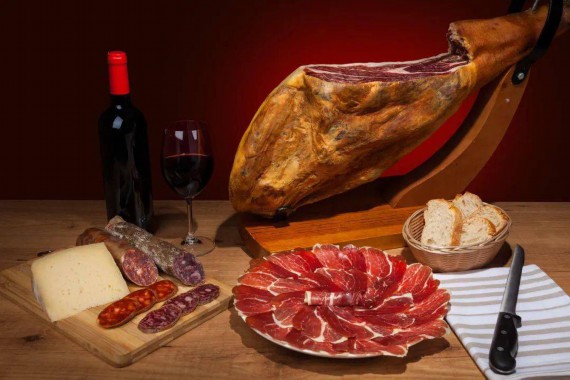
The ceremony started with my friend’s father using a short blade knife to skillfully remove the thick, yellow outer fat and tough skin from the top of the ham, a process called “Limpieza.” He explained that this layer of fat, due to oxidation, can taste bitter and must be thoroughly removed. Then he switched to the signature long and narrow ham knife, and the real performance began! With a light wrist motion, the blade slid along the muscle grain of the ham, producing wafer-thin slices with red and white marbling that fell gracefully. The whole process was smooth, focused, and elegant, like sculpting a work of art.
The sliced ham pieces showcased beautiful marble-like fat patterns, and my friend encouraged us to eat them directly by hand to better savor how the fat melted at our fingertips, enhancing the flavor. The melt-in-your-mouth texture and rich acorn aroma instantly erupted in the mouth, paired with local Picos bread sticks and a glass of Tempranillo red wine—the taste was truly amazing an unrivaled joy! I specially organized some of the core tools I saw during the Spanish ham carving ceremony to share with everyone:
| Tool | Purpose |
|---|
| Ham holder | Securely fixes the whole ham |
| Long slicing knife | Core tool for cutting even thin slices |
| Boning knife | Precisely separates meat along the bone edges |
| Sharpening steel rod | Sharpens blades anytime to keep them sharp |
This experience deeply made me realize that Spanish ham is not just food; it carries the Spanish people’s respect for tradition, love for family, and passion for life. This ceremonious sharing multiplies the deliciousness and fills everyone present with a strong sense of happiness. Have you ever participated in similar events in Spain? Or do you have experience carving ham at home? Feel free to share and exchange below!
