Hello everyone! As someone new to Spain, every time I visit the ham section in supermarkets, it feels like I’m doing a reading comprehension exercise. The variety of Jamón packaging is overwhelming. After several purchases, I often felt the taste didn’t match the price at all. Recently, I did some research and finally understood the meaning of those little labels on the packaging. I want to share it with you, hoping it helps fellow newcomers!
First, distinguish the two main categories: Serrano vs. Ibérico
The ham slices you see in supermarkets basically fall into two camps: Serrano ham and Ibérico ham. The simplest way to tell them apart is by the breed of pig. Serrano comes from regular white pigs, which are abundant and affordable, commonly found on Spanish tables daily. Ibérico, on the other hand, comes from the precious Iberian black-hoofed pig, which has more marbling and a more layered flavor profile, so naturally the price is significantly higher. So, before buying, check if the packaging says “Serrano” or “Ibérico”—this is the first step.
The “ID card” of Ibérico: Four color labels
If your target is Ibérico ham, then you need to check the color of the plastic tag on the leg according to Spanish ham labeling. This is an official classification mandated by the Spanish government, which directly informs you about the pig’s lineage and its “diet quality”; it is absolutely the most important reference to avoid being tricked!
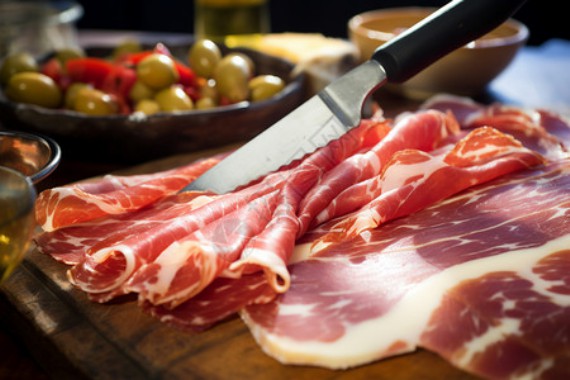
I’ve compiled a straightforward table for clarity:
| Label Color | Spanish Name | Breed Purity | Rearing Method | Taste Characteristics |
|---|
| Black | Bellota 100% Ibérico | 100% Iberian pig | Acorns, free-range pasture | Top level! Rich marbling, melts in your mouth |
| Red | Bellota Ibérico | 50% or 75% Iberian pig | Acorns, free-range pasture | Excellent quality, great value |
| Green | Cebo de Campo Ibérico | 50% or 75% Iberian pig | Free-range pasture with grain feed | Good flavor, moderate price |
| White | Cebo Ibérico | 50% or 75% Iberian pig | Grain-fed in enclosures | Entry level, everyday use |
So, did everyone get it? For the highest grade, look for the black label; if you want good value, red and green labels are both excellent choices; if it’s just for everyday sandwiches or side dishes, white labels and Serrano ham are enough. Also, the longer the curación (curing) time indicated on the packaging, generally the richer the flavor. For example, 24 months is definitely more fragrant than 12 months.
Hope this quick summary helps! Next time you shop for ham slices at Mercadona, Carrefour, Dia, or other supermarkets, you won’t be puzzled. Which type do you like best? Or do you have any secret favorite brands? Feel free to leave a comment for discussion! As for me, I started from the white label and am working my way up to black!
