Hello everyone! Having recently arrived in Spain, I’ve developed a deep interest in the national culinary treasure — Spanish ham. Many people know that Spanish ham is graded, and have heard of the famous “Iberian black pig,” but diving deeper, the stories and details behind it are quite fascinating. Today, I want to talk about the delicious ham we often eat and explore its true origins.
Actually, the history of Spaniards eating ham can be traced back to ancient Roman times. Back then, to preserve pork during long winters and military campaigns, people invented a method of curing and air-drying with sea salt. This ancient technique was passed down through generations, gradually evolving into the distinctive Spanish ham we know today. Each ham can be said to embody thousands of years of history and the climatic essence of the Iberian Peninsula.
The Two Main Camps of Ham: Serrano vs. Iberian
When I first arrived in Spain, I often confused Jamón Serrano and Jamón Ibérico, thinking they were just different brands. Later, I learned that this is a fundamental difference! Simply put, the difference lies in the breed of pig:
- Serrano Ham: Comes from regular white-hoofed pigs, produced in large quantities, affordable, and a common sight on Spanish everyday tables.
- Iberian Ham: Comes from the treasured Iberian black-hoofed pig. This pig has pure bloodlines, is freely raised in oak forests, feeding on acorns, giving the meat a unique nutty aroma, and is significantly more expensive. So when you see black hooves, it’s basically Iberian ham!
Although there are some crossbreeds.
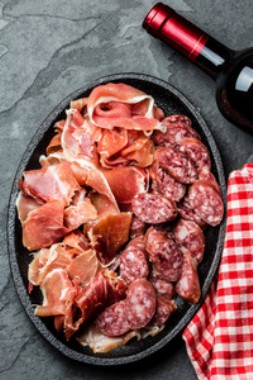
The “ID Card” of Ham: Designated Origin Areas
Just like France’s wine has appellation controls, top-tier Iberian ham also enjoys protected designated origin areas. This means from pig breeding, slaughtering to curing and air-drying, the entire process must occur within specific geographical zones and adhere to strict traditional standards. This not only guarantees quality but also symbolizes distinctive flavor. Currently, according to Spanish Ham Origins Explained, Spain has four main Iberian ham D.O. regions:
| Designated Origin | Main Geographic Location | Flavor Characteristics |
|---|
| D.O. Guijuelo | Province of Salamanca | Slightly sweet taste, more delicate fat texture |
| D.O. Jabugo | Province of Huelva | Strong aroma, long-lasting aftertaste |
| D.O. Dehesa de Extremadura | Extremadura Region | Richest acorn flavor, largest production |
| D.O. Los Pedroches | Province of Córdoba | Balanced taste with subtle herbal notes |
This is some research I’ve done and would like to share. After learning about Spanish Ham Origins Explained in Detail, next time you order at a restaurant or choose ham at a supermarket, you’ll probably be more confident. Which type of ham do you usually prefer? Any recommended brands or ways to enjoy it? Feel free to join the discussion below!
