Detailed Guide on Slicing Spanish Ham Thinly
Living in Spain, ham is an indispensable delicacy in daily life. Many people like to buy a whole Iberian ham to keep at home, and when there are gatherings or friends visiting, they slice a few pieces—both elegant and satisfying. However, slicing uniformly colored ham into [ultra-thin slices] as thin as cicada wings can be challenging for beginners. Here, I’d like to share some practical tips, hoping to help fellow “ham lovers.”
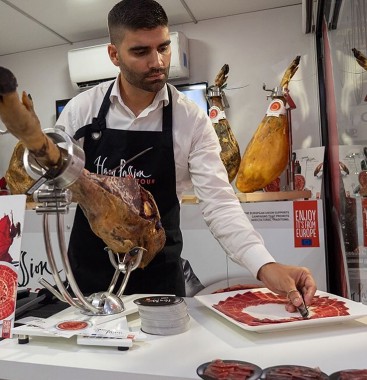
Preparation
Slicing ham is not only about technique; the most important factors are the knife and the stand. Generally, you need a very sharp, long, and flexible ham knife, as well as a suitable ham holder, such as the Spanish ham slicing thinly ham stand. The difference between a ham knife and a regular kitchen knife is huge—the ham knife cuts slices more smoothly and is less sticky. I usually recommend the following set:
| Tool | Usage |
|---|
| Jamonero knife | Slicing thin pieces |
| Ham stand | Securing the ham |
| Small knife | Separating ham from bones |
Besides the knife and stand, don’t forget a damp towel and disposable gloves for hygiene and safety.
Correct Slicing Steps
- Secure the ham: Place the ham with the hoof facing up and firmly clamp it on the stand.
- Remove the outer skin: Use the small knife to peel off the yellowish fat layer and hard fat until the raw meat is exposed.
- Set the right angle: When slicing, keep the knife blade parallel to the ham’s surface, cutting slowly and applying even pressure.
- Slice evenly and thinly: Aim for transparent slices approximately 6–8 cm long without breaking.
Each slice should follow the grain of the ham. Cutting too thick affects texture, too thin can cause breakage. After slicing, arrange the slices one by one on a plate, ideally served with some bread or tomato for enhanced flavor!
Notes When Slicing Ham
- Beginners may tend to cut slices too thick or uneven at first; don’t rush, practice multiple times and you will improve.
- Once exposed, ham can dry out quickly. After each cut, cover the cut surface with the fat trimmings and wrap it with cling film to prevent drying.
- The knife must always be sharp during slicing; dull knives increase the risk of injury and result in unattractive cuts.
My Experience Summary
I have tried pre-sliced ham from supermarkets as well as slicing a whole ham at home. While pre-sliced is convenient, it’s hard to control thickness and the experience is less satisfying. For those who have conditions at home, I sincerely recommend trying it yourself: although challenging, it is very enjoyable. Achieving beautifully sliced thin pieces brings a great sense of accomplishment.
If anyone has other tips or tricks, you are warmly welcome to share and discuss in the comments!
