As a football fan who has lived in Spain for several years and follows the Spain football team roster, every time I see the Spain national team’s badge, it reminds me of those thrilling match moments. Today, I would like to share the story behind this emblem that carries countless honors.
Basic Design Elements of the Badge
The Spain national team’s badge design is quite classic, featuring a shield shape with the Spanish coat of arms depicted on it. The red and yellow as the main colors perfectly reflect the color scheme of the Spanish flag. The central castle, lion, and other patterns on the badge have deep historical significance, representing different Spanish kingdoms and regions.
Historical Evolution Process
Talking about the evolution of the badge is quite interesting. Since the 1920s, the Spanish Football Federation has been using badges featuring elements of the national coat of arms. However, the most impressive change took place in 1981 when the badge underwent a major reform, simplifying many complex decorative elements to give the overall design a more modern look.
| Year | Main Changes | Features |
|---|
| 1920s | First use of coat of arms elements | Traditional royal style |
| 1981 | Major design reform | Simplified and modernized |
| 2004 | Detail optimization | More vibrant colors |
Cultural Connotations Behind the Design
Every element on the badge is purposefully placed. The castle represents the Kingdom of Castile, the lion symbolizes the Kingdom of León, and the pomegranate at the bottom stands for the Kingdom of Granada. These elements combined perfectly interpret the historical process of Spain as a Spain football team captain unified country. Especially the famous Plus Ultra motto, meaning “Further beyond,” embodies the Spanish spirit of never being satisfied and always exploring.
Symbolic Meaning in Modern Football
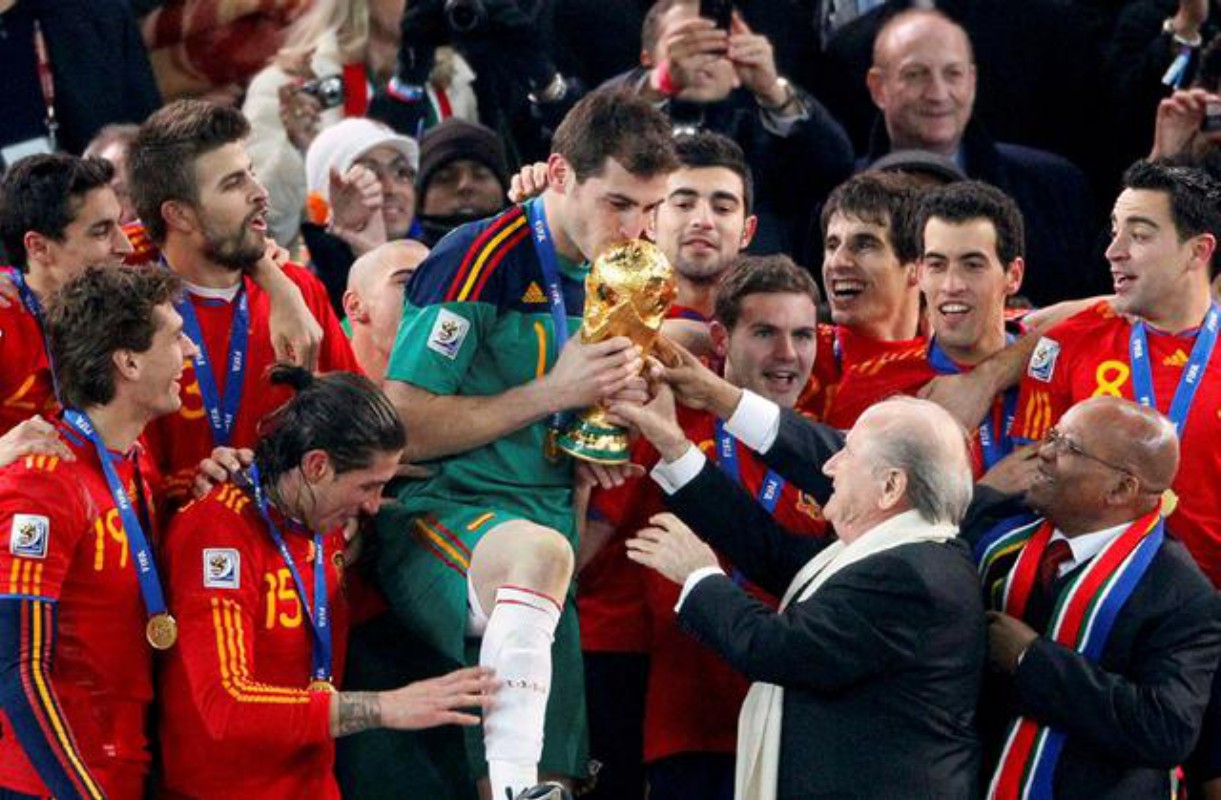
For contemporary fans of the Spain football team badge, this badge carries many cherished memories. Each championship in the 2008 European Championship, the 2010 World Cup, and the 2012 European Championship made this badge shine even brighter. I remember on the day of the 2010 World Cup final, the entire country went crazy, and you could see this badge everywhere on the streets and in neighborhoods.
Nowadays, the badge design is very mature and presents well visually both on jerseys and on various official merchandise. The blue outer frame adds depth to the entire design, while the golden decorations bring a touch of luxury. This design successfully maintains tradition while meeting modern aesthetic demands, which explains why it is widely recognized by fans.
