Recently, while watching a game in Madrid, I suddenly realized that the overall strength of Spanish forwards is steadily improving. From the traditional technical style to today’s more versatile modern forwards, the change is quite evident.
Innovation in Youth Development
Spanish football youth academies have always been known for technical excellence, but in recent years new approaches have emerged in forward training. They no longer purely focus on footwork but emphasize physical confrontation and shooting efficiency. Youth academies of clubs like Real Madrid and Barcelona now design specialized training programs for forwards, including heading, positioning, and counterattacking skills.
I looked at some data from the fc football Spain pack which is quite interesting:
| Age Group | Technical Rating | Physical Fitness | Shooting Accuracy |
|---|
| U17 | 8.2 | 7.1 | 6.8 |
| U19 | 8.5 | 7.8 | 7.5 |
| U21 | 8.7 | 8.2 | 8.1 |
From this table, it can be seen that all abilities develop in a balanced way as age increases, indicating that the youth system is indeed effective.
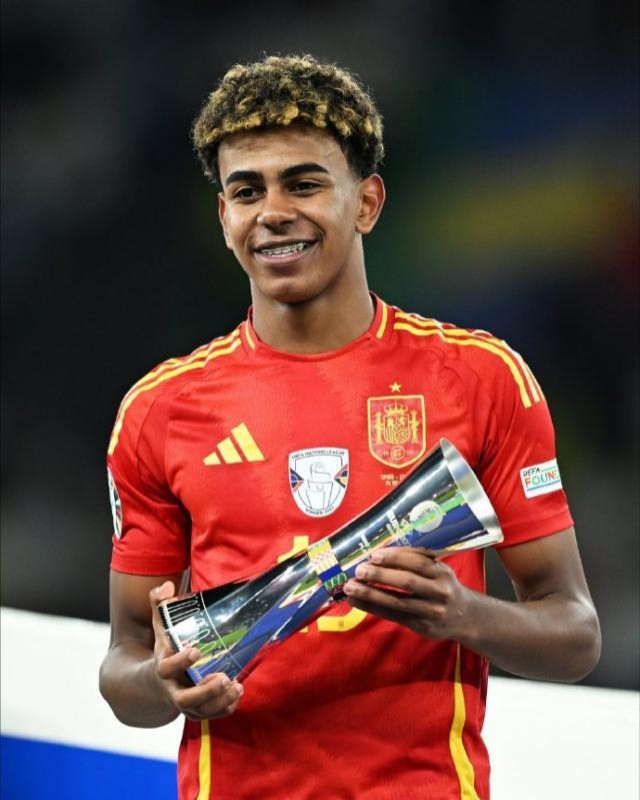
Evolution of Tactical Style
Today’s Spanish forwards no longer wait passively inside the box; their activity range has clearly expanded. They often drop back to receive the ball or pull wide to create space. This change aligns with broader trends in European football, as seen in the Spanish FCB football club, where forwards must engage more in overall team play.
Especially in counterattacking tactics, speed and positioning awareness have become increasingly important. The traditional static center-forward no longer fits the demands of modern football.
Activity in the Transfer Market
During this summer’s transfer window, several Spanish forwards received good offers. Although few deals were finalized, it at least shows the market’s growing recognition of their value. Young forwards performing well in the Segunda División have started to attract attention from Premier League and Bundesliga clubs.
Prices remain reasonable without the appearance of astronomical fees. Most transactions stay within sensible ranges, which benefits the players’ long-term development.
Technical Characteristics Analysis
From match observations, Spanish forwards nowadays generally possess several traits: First, their footwork remains delicate with solid passing and ball control fundamentals; second, their movement off the ball is smarter, knowing when to push forward and when to retreat; third, their shooting decisions are more decisive, avoiding over-perfectionism that leads to missed chances.
Of course, there are areas for improvement, such as performing better in high-intensity physical duels. After all, the defensive strength in Europe’s top leagues is no joke.
The future of Spanish forwards holds great promise. With a strong youth foundation, advanced tactical concepts, and the development opportunities offered by the league platform, more outstanding forwards are expected to emerge.
