As a long-time football fan living in Spain, today I want to talk about the iconic elements of Spanish football. These symbols not only represent the identity of the teams but also carry deep historical and cultural heritage.
Real Madrid’s Crown Emblem
When it comes to Spanish football symbols, Real Madrid’s badge is undoubtedly one of the most representative. The shining crown is not just decoration but a genuine honor granted by the Spanish royal family. In 1920, King Alfonso XIII personally bestowed the “Royal” title on the club, and ever since, this golden crown has become a symbol of Spanish football identity for Real Madrid. Every time you see this emblem, you can feel the legacy and pride of a century-old football powerhouse.
Barcelona’s Catalan Elements
Barcelona’s badge is equally rich in stories. The red and blue stripes represent the club’s traditional colors, while the cross on the shield reflects the cultural characteristics of the Catalonia region. Especially the phrase “Mes que un club” perfectly showcases Barça’s political and cultural identity. During Franco’s dictatorship, Barcelona’s emblem even became a symbol of Catalan national identity.
| Club | Symbol Element | Cultural Significance |
|---|
| Real Madrid | Golden Crown | Royal Honor |
| Barcelona | Red and Blue Stripes | Catalan Culture |
| Atlético Madrid | Red and White Stripes | Working-Class Spirit |
| Sevilla | City Crest | Andalusian Tradition |
Spain National Team’s Bullfighter Image
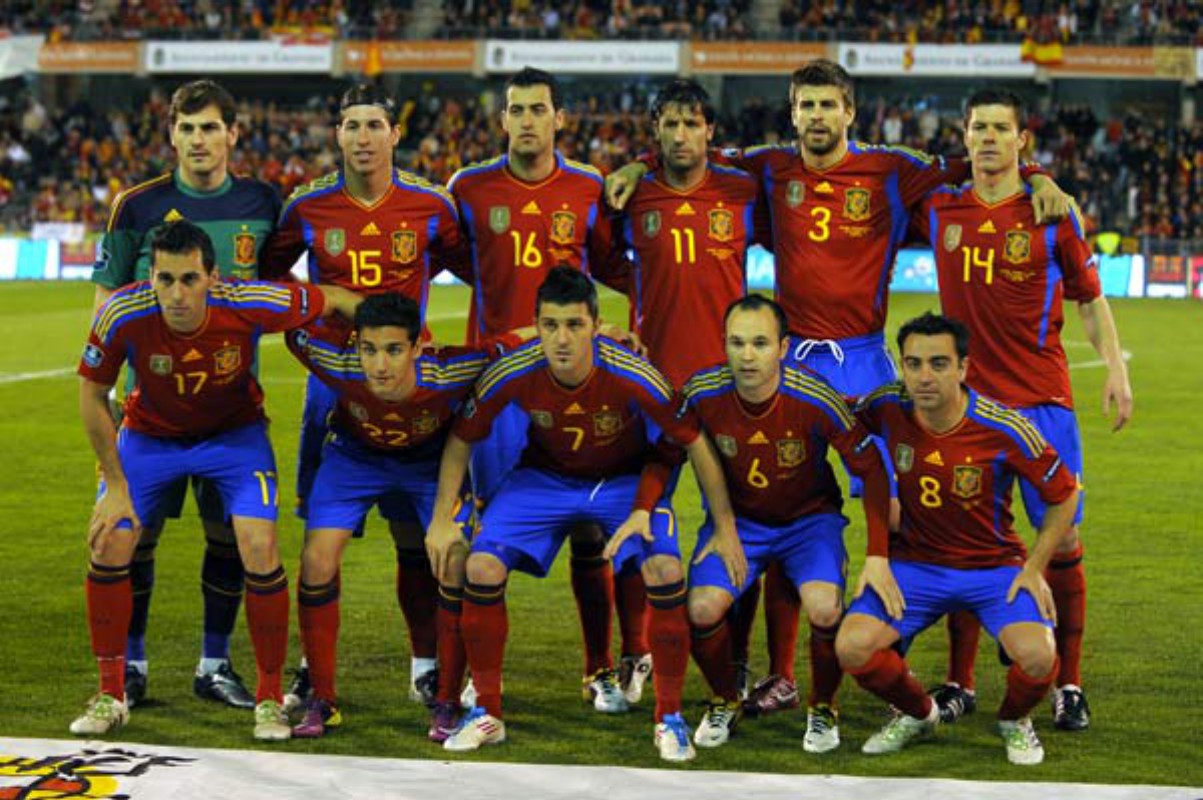
The Spain national team is known as the “Matador Squad”, a nickname that perfectly encapsulates the essence of Spanish football. The red jersey symbolizes the bullfighter’s cape, and the technical, elegant playing style resembles the graceful yet deadly dance of a matador. During the 2008-2012 triple championship period, this iconic image reached its peak, and the world became familiar with this possession-based team.
Regional Characteristics of Local Clubs
Besides the Spanish football jersey symbols of elite clubs, many small and medium-sized teams across Spain have their unique emblematic elements. For example, Athletic Bilbao’s tradition of using only Basque players is visibly reflected in their badge featuring the Basque cross. Real Sociedad’s blue and white colors embody the coastal city of San Sebastián’s character. These seemingly simple designs actually contain profound regional cultural meanings.
These football symbols are more than visual icons; they are vital carriers of Spanish football culture. They witness the evolution of Spanish football from a local sport to a global phenomenon and hold countless fans’ emotions and memories. Whenever I see these emblems on the streets of Madrid, I can feel the country’s passion and pride for football.
