Spain’s World Cup Journey Review
As a European football powerhouse, how many times has the Spain national football team actually won the World Cup? The answer is once. Though it might be surprising, this single World Cup title is highly significant and marks the pinnacle of Spanish football.
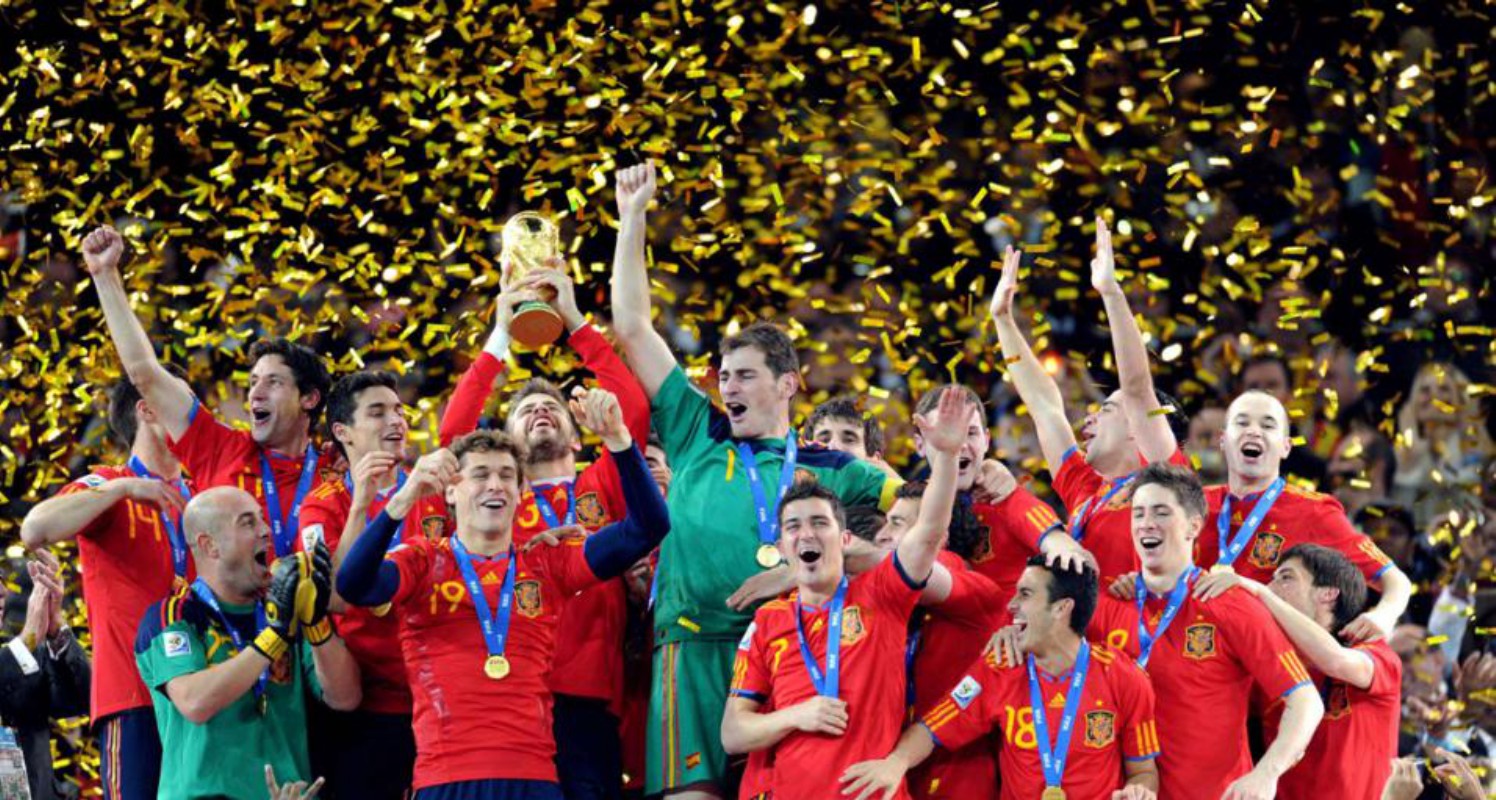
2010 South Africa World Cup: A Historic Breakthrough
On July 11, 2010, at Soccer City Stadium in Johannesburg, South Africa, Spain secured their first-ever World Cup championship by defeating the Netherlands 1-0, thanks to Iniesta’s goal in the 116th minute of extra time. This victory ended Spain’s 82-year wait for a World Cup title and heralded the dawn of a golden era for Spanish football.
This Spanish squad was star-studded, featuring world-class players like Xavi, Iniesta, Villa, and Ramos. Their tiki-taka football style was fully displayed in this World Cup, maintaining possession over 60% on average per match and showcasing the beauty of technical football.
Spain’s World Cup Historical Performance Statistics
| Year | Result | Head Coach |
|---|
| 2010 | Champion | Vicente del Bosque |
| 2018 | Round of 16 | Lopetegui / Hierro |
| 2022 | Round of 16 | Enrique |
| 2014 | Group Stage Exit | Vicente del Bosque |
| 2006 | Round of 16 | Aragonés |
Aside from the 2010 championship, Spain has delivered several impressive World Cup performances. In 1950, they finished fourth, which was their best-ever result before 2010. Unfortunately, as defending champions participating in the 2014 Brazil World Cup, Spain was eliminated in the group stage, setting the worst record ever for a defending champion.
Tactical Characteristics and Success Factors
Spain’s 2010 triumph cannot be separated from their unique football philosophy. Tiki-taka football became their hallmark, focusing on short passes and synchronized movement between players to control the game’s tempo. This approach demands players with excellent technical skills and tactical discipline.
Notably, during the 2010 World Cup, Spain’s core players mostly came from the two giant clubs Barcelona and Real Madrid. Their club-level success experience greatly contributed to the Spain winning the football world championship of the national team. The midfield partnership of Xavi and Iniesta was a masterpiece, while Casillas delivered legendary performances guarding the goal.
