As a fan who has lived in Spain for five years, I have witnessed firsthand the country’s passion and professionalism for football. Recently, chatting with friends about Spain’s glorious era in football, one cannot ignore the three-peat era that all Spaniards are proud of. From the 2008 European Championship to the 2010 World Cup, and then the 2012 European Championship, these three trophies are not just honors but a perfect embodiment of the Spanish football philosophy.
The Rise of the Golden Generation
Speaking of the Spanish team from that era, it was truly filled with talent. Names like Xavi, Iniesta, Casillas, Ramos, and Villa still ignite passion today. This group of players reached an unprecedented level of technical skill and tactical understanding, and their experiences at clubs like Barcelona and Real Madrid laid a solid foundation for the national team. I remember the 2008 European Championship when many were still skeptical of Spain because they often faltered at key moments before, but that time was truly different.
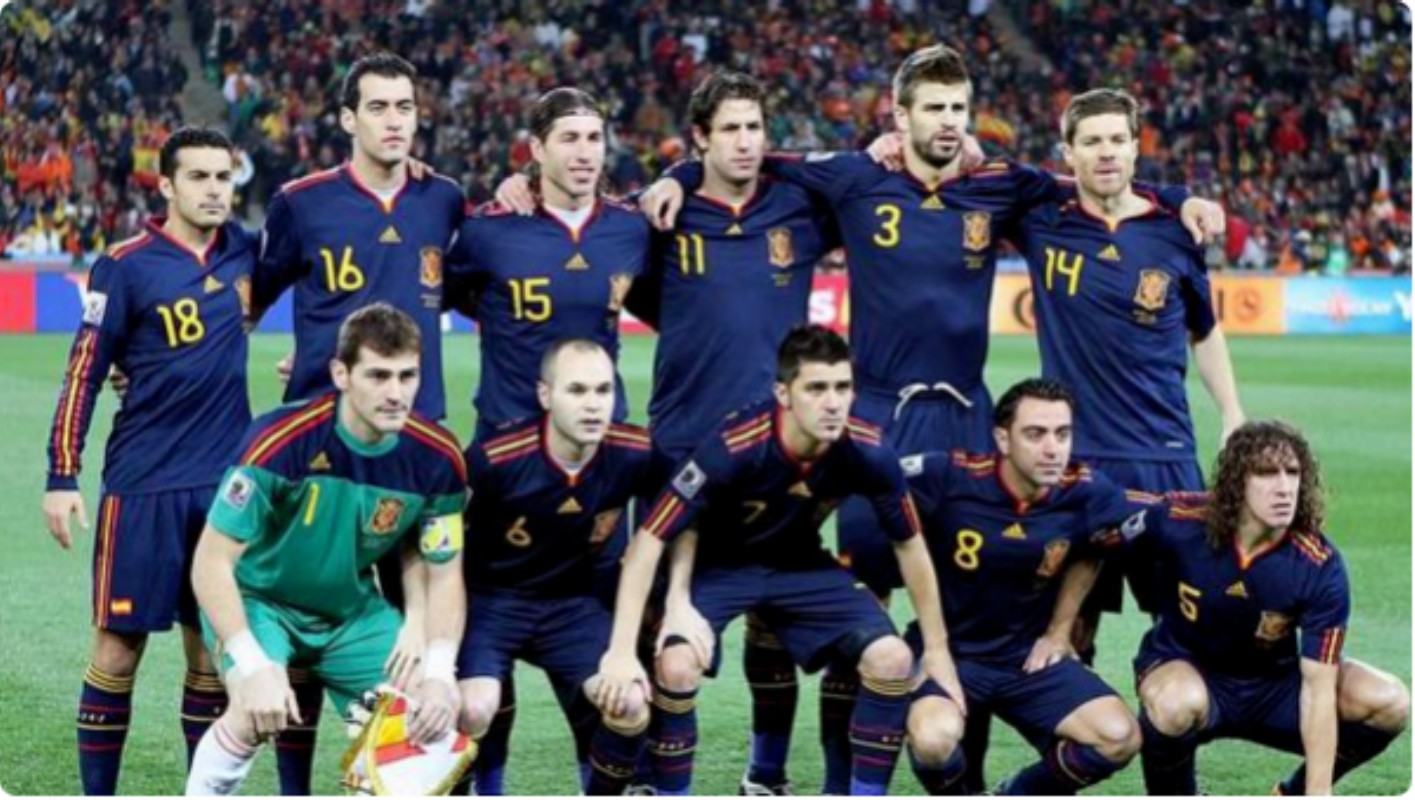
What impressed most was their possession football philosophy. Short passes, ball control percentage, and patiently seeking opportunities combined to form a new football aesthetic. In an era that emphasized physical confrontations and long-ball tactics, Spain proved with technique and intelligence that football could be played differently.
The Refinement of Tactical Systems
Coach Del Bosque’s contribution cannot be overlooked. After taking over the team, he perfectly integrated Barcelona’s tiki-taka tactics into the national team system. This tactical system, centered on short passing, requires every player to have outstanding technical and tactical understanding, and the Spanish team was fortunate to have such a player pool.
| Tournament | Year | Key Players | Tactical Characteristics |
|---|
| European Championship | 2008 | Villa, Silva | Wing breaks + central penetration |
| World Cup | 2010 | Xavi, Iniesta | Extreme possession + late runs |
| European Championship | 2012 | Iniesta, Silva | False nine formation + all-out attack and defense |
Especially at the 2010 World Cup, Spain maintained an average possession rate exceeding 60%, which was exceptionally rare at the time Spain’s Three-Peat Football Configuration. They used countless short passes to organize attacks, exhausting opponents physically and psychologically, ultimately gaining the advantage.
The Crucial Role of Youth Training Systems
Spain’s football success is far from accidental; it is supported by a comprehensive youth training system. Those who think Spain was just lucky clearly can’t stand such arguments. From La Masia to various youth levels, Spain has established a highly unified development model both technically and tactically. This ensures that whether in clubs or the national team, players quickly adapt to similar tactical concepts.
When I was in Madrid, I often watched youth matches and found that even teenagers had a profound understanding of possession football. Coaches emphasize technical details and tactical discipline from a young age, and this long-term accumulation created later brilliance.
The Profound Impact on Modern Football
Spain’s three-peat is not only their own glory but has deeply influenced the development direction of world football. Nowadays, many national teams and clubs study their possession philosophy. Though not every team can replicate the success, this football philosophy has become an essential part of modern football. Technical football has regained its rightful status, which positively propels the entire sport’s development.
Looking back at that era, as an ordinary fan, I feel truly lucky to have witnessed such football artistry. Although the current Spanish team is no longer the same, the brilliance of that three-peat will forever be remembered in football history and continue to inspire new generations of Spanish players to fight for national honor.
