History of Spanish and Italian Football
As two traditional European football giants, the history of Spanish football shares similarities with Italy’s own football development path, yet each country displays unique characteristics. Since football was introduced to the Iberian and Apennine Peninsulas in the late 19th century, both nations have embarked on their distinct journeys in football development.
Early Origins and Development
The origin of Spanish football traces back to the 1890s when British merchants and students brought the sport to Spain. The Spanish Football Federation was officially established in 1902, four years after the Italian Football Federation was formed. Italian football started even earlier with the Italian Football Federation founded in 1898, the same year the first Italian Football Championship was held.
During this period, both countries’ football developments were deeply influenced by British football. Notable Spanish clubs like Real Madrid and Barcelona were founded, while Italian giants such as Juventus and AC Milan laid their foundations around the same time. It is worth highlighting that Italy won consecutive World Cups in 1934 and 1938, becoming one of the early football powerhouses.
The Rise of the Golden Era
Post World War II, Spanish and Italian football encountered crucial opportunities for growth. Spain won its first European Championship in 1964, while Italy triumphed again in 1968. During this era, both countries’ playing styles and tactics began to take shape.
| Period | Major Achievements in Spain | Major Achievements in Italy |
|---|
| 1960s | 1964 European Championship Winner | 1968 European Championship Winner |
| 1970s | Emergence in European club competitions | 1982 World Cup Champion |
| 1980s | Development of technical football | Maturation of counter-attacking defense |
Italian football developed the famous “catenaccio” defensive counter-attacking style during this time, while Spain started focusing on technical skill and possession-based football. At the 1982 World Cup hosted by Spain, the host nation performed modestly, whereas Italy secured the championship, showcasing their sophisticated tactical system.
The Glory of Modern Football
Entering the modern football era, both Spain and Italy underwent significant transformations. Italian football reached new heights in the 1990s, finishing as runners-up in the 1994 World Cup and the 2000 European Championship, reflecting their formidable strength. Additionally, Serie A became the top league globally, attracting numerous elite players.
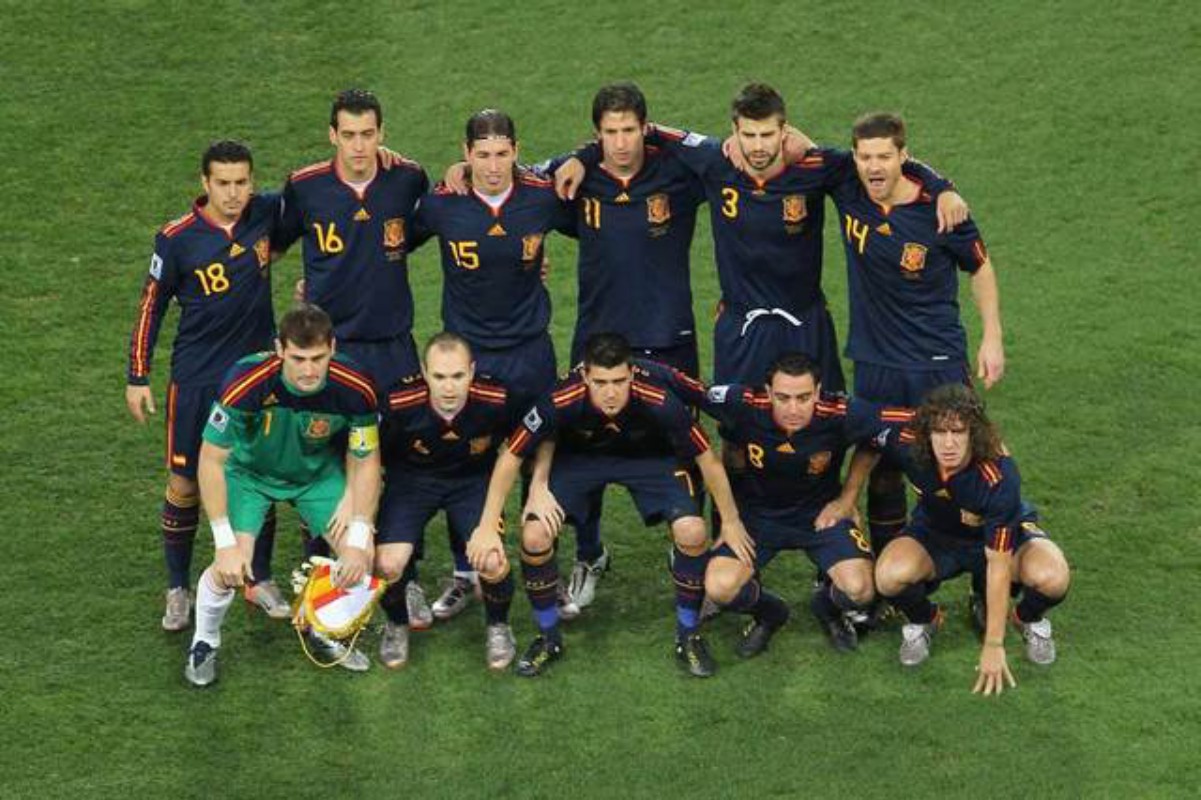
Spanish football experienced an unprecedented golden era in the late 2000s. Spain’s three major consecutive titles — the 2008 European Championship, the 2010 World Cup, and the 2012 European Championship — established them as one of the most successful national teams in football history. Behind this success were the highly effective La Masia youth academy system and the perfect execution of the tiki-taka playing style.
Contemporary Developments and Future Outlook
Today, both Spanish and Italian football seek breakthroughs in a new historical period. After the disappointment of missing the 2018 World Cup, Italy has risen again through youth training reforms and tactical innovation, with their 2021 European Championship victory as clear evidence. Although Spain went through a short decline after the 2014 World Cup, its rich football heritage and well-established youth systems continue to guarantee the national team’s competitiveness.
The era of relying solely on individual skills is now over; modern football emphasizes team coordination and tactical execution. Whether it is Spain’s possession-based football or Italy’s balanced attack and defense, both have found their place in modern football’s evolution and continue contributing unique value to the world game.
