Spain’s Continental Classification
As someone who has lived in Spain for many years, I’m frequently asked by friends which continent Spain actually belongs to. This seemingly simple question actually involves multiple aspects including geography, history, and culture. Today, let’s discuss this topic in detail.
Clear Geographical Answer
Spain undoubtedly belongs to the European continent. From a geographical perspective, Spain is located on the Iberian Peninsula in southwestern Europe, sharing most of this peninsula with Portugal. Spain’s geographical coordinates are approximately between 36°-44° North latitude and 9°18′ West-3°19′ East longitude, entirely within the boundaries of the European continent.
While Spain possesses its main territory on the European continent, it also has two autonomous cities in North Africa: Ceuta and Melilla. However, this doesn’t change Spain’s essential character as a European nation.
Border and Neighboring Country Relations
Looking at border demarcations, Spain’s geographical position becomes even clearer:
| Direction | Neighboring Countries/Seas | Border Length |
|---|
| North | France, Andorra | Approximately 656 km |
| East | Mediterranean Sea | Approximately 1,660 km |
| South | Mediterranean Sea, Strait of Gibraltar | Approximately 1,200 km |
| West | Portugal, Atlantic Ocean | Approximately 1,214 km |
The Pyrenees Mountains between Spain and France form a natural geographical boundary, which is also considered an important geographical marker between the Iberian Peninsula and the rest of the European continent. Through these border relationships, we can clearly see that Spain is deeply rooted in the European geographical system.
Cultural and Political Affiliation
Beyond geographical location, Spain completely belongs to Europe culturally and politically. Spain was one of the founding members of the European Union, officially joining the European Community in 1986. In the European integration process, Spain plays an important role, using the Euro as its must-visit Spanish attractions official currency and following all EU laws and regulations.
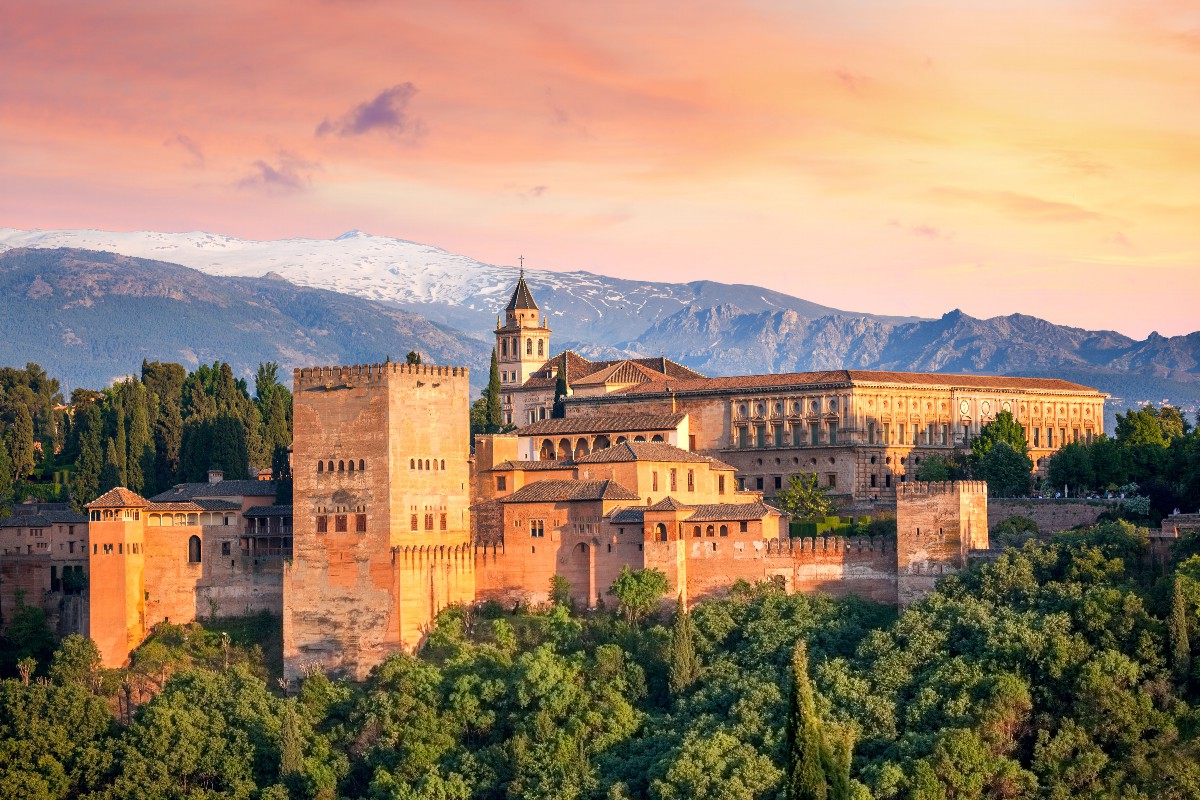
From a cultural perspective, Spain belongs to the Latin European cultural sphere, sharing similar cultural traditions and values with countries like Italy, France, and Portugal. Some people might be confused due to Spain’s Arabic cultural influences, but this cultural fusion precisely reflects the diversity and inclusiveness of European civilization.
Historical Development Context
From a historical development perspective, Spain’s European identity has deep roots. As early as the Roman period, the Iberian Peninsula was an important part of the Roman Empire. During the medieval period, despite experiencing Arab rule, Spain always maintained connections with other European regions. By the late 15th century, with the completion of the Reconquista and the discovery of the New World, Spain became one of Europe’s most powerful maritime empires.
Modern Spain’s democratization process is also closely connected to Europe. After Franco’s death in 1975, Spain began its transition to democratic institutions and actively integrated into European political and economic systems. This historical process further consolidated Spain’s position as a Spanish tourism European nation.
Whether viewed from geographical, political, economic, or cultural perspectives, Spain is undeniably a European country. As an important member of the Spanish tourism European family, Spain plays an active role in promoting European integration and maintaining European values.
