As a foreigner who has lived in Madrid for many years, I have always been fascinated by this country’s complex political history. While recently organizing some historical materials, I wanted to share with you several important stages of Spanish revolutionary history, hoping to help more friends interested in Spanish history understand this land’s past.
The Outbreak of the 1936 Civil War
The Spanish Civil War can be considered one of the most influential revolutionary events of the 20th century. On July 17, 1936, a group of military officers led by Francisco Franco launched a coup, attempting to overthrow the Republican government. This conflict quickly evolved into a full-scale civil war, with the entire nation torn apart into two opposing camps. The Republicans received support from the Soviet Union and International Brigades, while the Nationalists obtained assistance from Nazi Germany and Fascist Italy.
The war lasted nearly three years, causing enormous casualties and social trauma. It is estimated that approximately 500,000 people died in this conflict, with millions displaced. This war not only changed Spain’s political landscape but also served as a rehearsal for World War II.
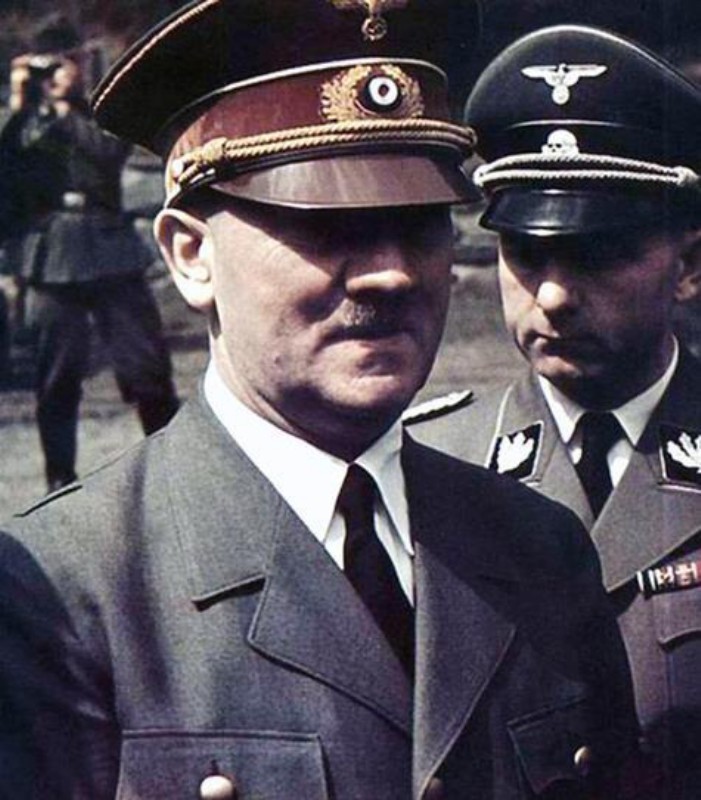
Comparison of Forces
The distribution of political forces during the civil war was quite complex, which can be briefly summarized in the following table:
| Camp | Main Composition | International Support |
|---|
| Republicans | Socialist Party, Communist Party, Anarchists | Soviet Union, International Brigades |
| Nationalists | Military, Catholic Church, Conservative Forces | Germany, Italy |
The Franco Dictatorship Period
After the civil war ended in 1939, Franco established a 36-year dictatorship. During this period, Spain experienced harsh political repression and economic hardship. The government implemented strict censorship, banned the use of regional languages, and suppressed any form of political dissent.
Economically, Spain adopted a policy of self-sufficiency, isolating itself from the outside world. The situation only improved in the late 1950s. The rise of tourism and increased foreign investment injected new vitality into economic development.
The Miracle of Democratic Transition
After Franco’s death in 1975, Spain began the democratization process known as the “Transition.” King Juan Carlos I and Prime Minister Adolfo Suarez played key roles, achieving fundamental transformation of the political system through peaceful means.
Many people predicted the transition would be filled with violence and conflict, but the process was actually relatively peaceful. The adoption of the new constitution in 1978 marked the formal establishment of democratic institutions, and Spain embarked on the path of a modern democratic nation.
The Modern Significance of Revolutionary Legacy
Contemporary Spanish society can still feel the influence of that revolutionary history. Different regions have varying interpretations of historical events, which is also reflected in contemporary political debates. Understanding this history is crucial for recognizing the political culture and social structure of modern Spain, much like understanding Moorish history.
As a foreigner living here, much like those who once sailed with the Spanish Armada, I deeply appreciate how history has shaped the collective memory and values of the Spanish people. This complex and painful historical experience ultimately forged today’s diverse, open, and democratic society.
