National Spanish Language Ranking and Trend Analysis
In recent years, the global influence of Spanish has continued to rise. Not only does it hold an important position in Latin America and Europe, but it has also gradually gained more attention in the study abroad and language training markets in Asia. In Spain itself, the language’s usage ranking is clear, and in the nationwide ranking of language competitiveness, Spanish still firmly occupies top positions.
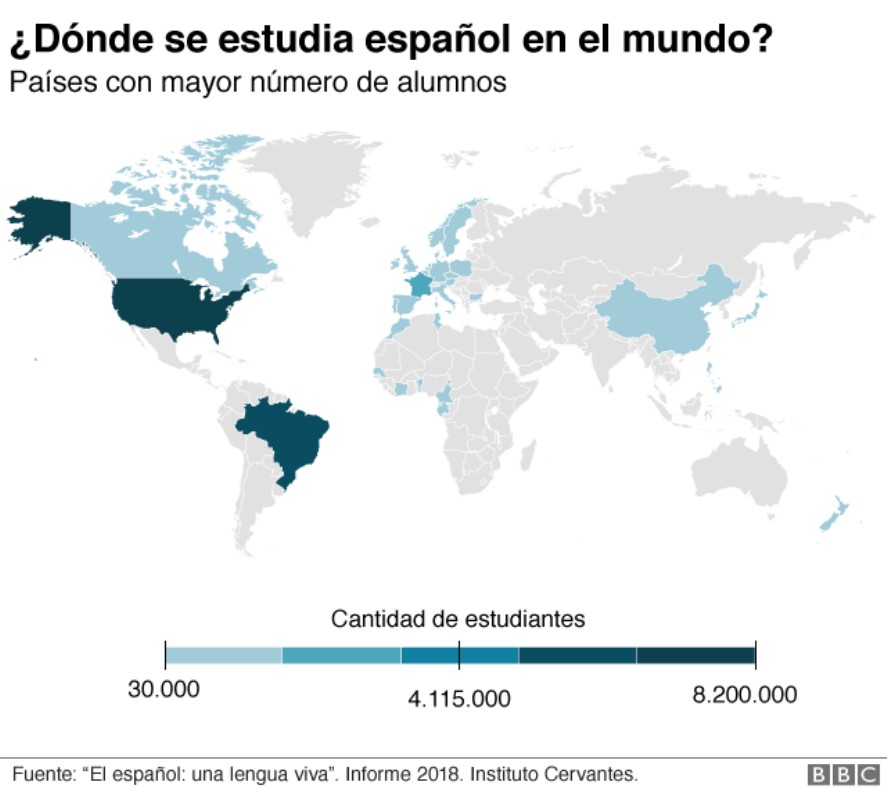
Spanish Education and Popularization
Across Spain, from primary school to university, there is a systematic language education framework, and the Spanish Language TEM-4 exists in some autonomous communities. In addition to Spanish, Galician, Basque, and Catalan are also taught. According to recent statistics, native Spanish speakers account for over 75% of the national population, and the language plays a central role in international communication. This ensures its stable performance in international rankings.
Regional Language Rankings
The table below shows the main languages used in different autonomous communities of Spain:
| Autonomous Community | Main Language |
|---|
| Andalusia | Spanish |
| Catalonia | Catalan / Spanish |
| Basque Autonomous Community | Basque / Spanish |
| Madrid | Spanish |
From the table, it is clear that while some autonomous communities feature multiple languages coexisting, from a national ranking perspective, Spanish still maintains an absolute advantage. This advantage is reflected not only in population numbers, but also in media coverage and the reach of public services.
Learning Trends and International Ranking
As economic and cultural exchanges increase, the group of Spanish learners has become increasingly diverse. Besides local students, more and more international students choose Spain to further develop their language and professional skills. This has directly helped Spanish maintain its position within the top three in the world language rankings. This trend continues to accelerate.
Recommendations for Learners
If you live in Spain, mastering Spanish is almost a prerequisite for integrating into local life. It is recommended that learners improve their skills through daily communication, watching Spanish-language films and TV series, and participating in language exchange activities. In doing so, you’ll be able to communicate seamlessly nationwide and gain more opportunities in international exchanges.
Conclusion
Spanish holds a strong position in national rankings, supported by a large speaking population and a comprehensive education system. For learners, it is a language of long-term value. Whether for everyday life or career development, the advantages of Spanish cannot be overlooked.
