Gaudí’s World in Barcelona
If Spain architecture is like a heavy history book, then the works of [Gaudí] in Barcelona are its most vivid chapters. The Sagrada Família has become the symbol of the city, its façade so complex that it leaves you in awe. Step inside and you’ll be surrounded by the light streaming through colorful stained glass, as if entering a dream.
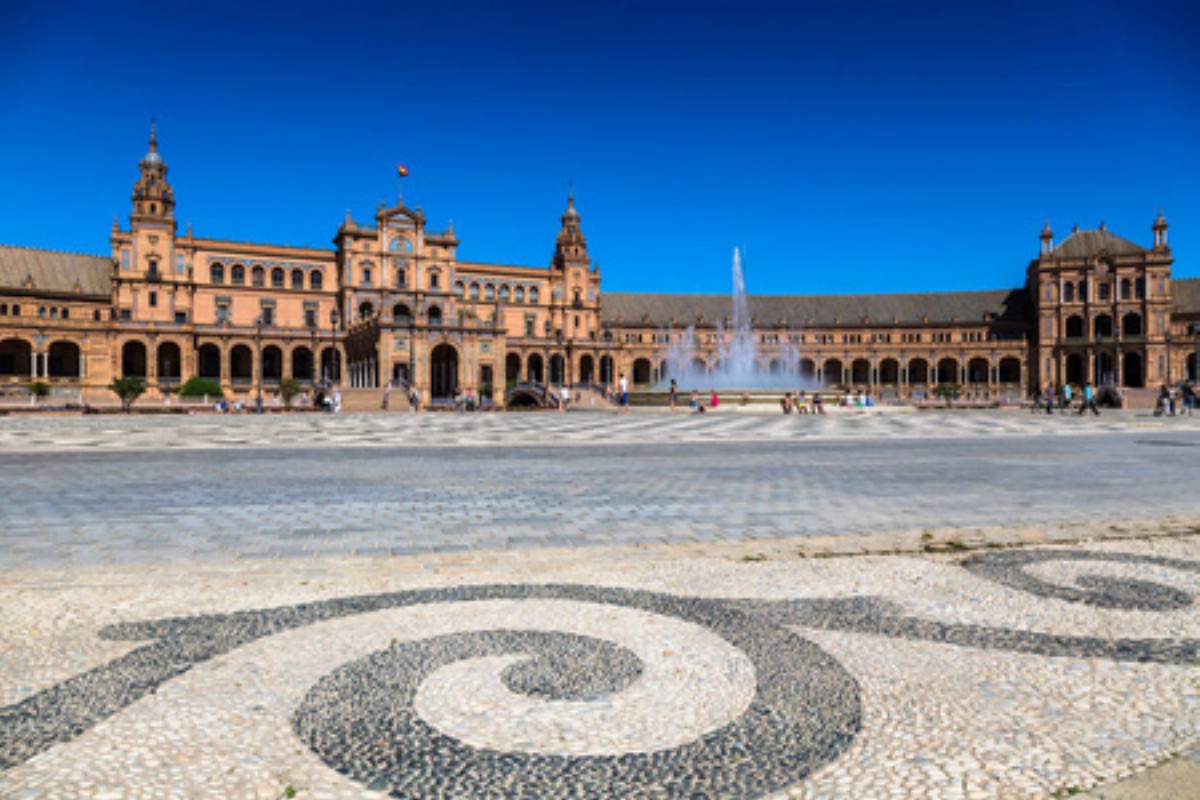
Madrid’s Blend of Classic and Modern
Madrid may not be famous for whimsical buildings, but its blend of classical and modern styles is equally captivating. The Art Deco facades along Gran Vía stand in contrast yet in harmony with modern skyscrapers. At night, lights illuminate the old facades, making you feel as if time has intertwined.
Andalucía’s Mudéjar Style
Southern Andalucía is rich in Moorish influences, with Seville’s Royal Alcázar telling the story of Islamic and Christian cultural interweaving through its arched corridors and geometric tiles. This unique Mudéjar style is hard to find elsewhere in Spain, making it worth experiencing in person.
Modern Experiments in the Basque Country
In Bilbao, the curved forms of the Guggenheim Museum completely challenge the traditional idea of what a museum should be. Architect Frank Gehry used titanium panels to create a piece to rival the artworks inside, making it one of the icons of modern Spanish architecture.
Comparison: Architectural Features of Different Cities
| City | Architectural Style |
|---|
| Barcelona | Gaudí’s Catalan Modernisme |
| Madrid | Classical and modern blend |
| Seville | Mudéjar style |
| Bilbao | Contemporary design |
Walking through the streets of Spain, you’ll notice that whether it’s Barcelona’s fantastical facades, Madrid’s classical charm, or Andalucía’s Moorish allure, each invites you to pause. When traveling, consider taking extra time to look up and check out the details in the Spain architecture rankings, because those lines and colors carry the truest stories of this land.
