Gaudí and Barcelona’s Fantastical Icons
When it comes to Spain’s magical realism architecture, many instantly think of Antoni Gaudí. His work is filled with dreamlike curves and colors, turning the city into a real-life fairy tale. Landmarks such as the Sagrada Família and Casa Batlló not only astonish visually but also embody his unique architectural philosophy—perfectly merging natural forms with structural integrity.
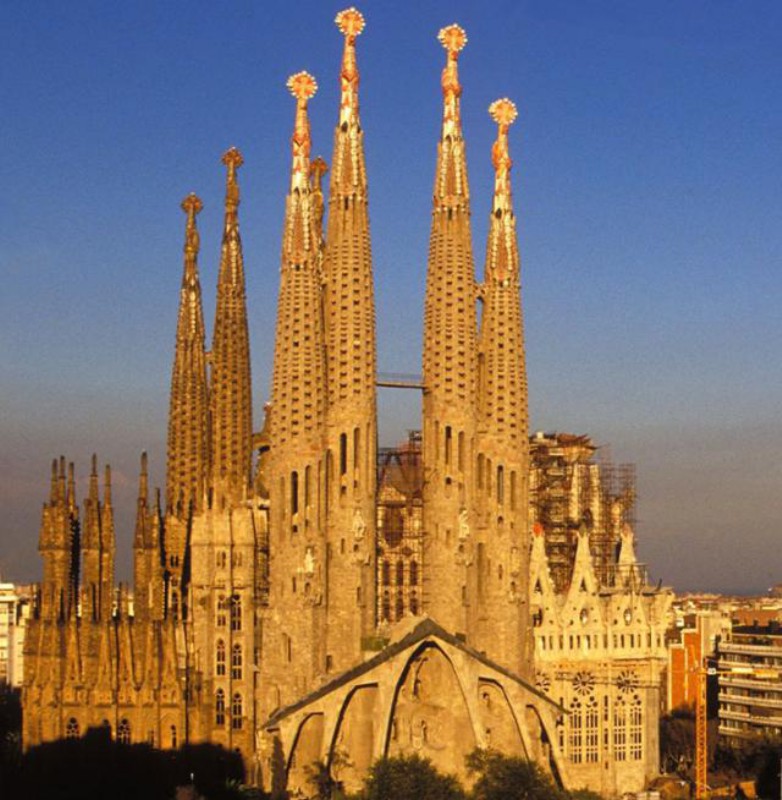
Magical Traces Beyond Catalonia
Although Gaudí’s creations in Catalonia are the most renowned, magical realism can be found elsewhere in Spain. For example, Madrid’s Casa de las Flores uses colorful ceramics and unusual shapes to craft a distinctive urban landscape. Some modern buildings in Granada boldly blend history with fantasy in their layouts, making visitors feel as though they have stepped into a magical film.
Characteristic Elements of Magical Realism Architecture
Magical realism architecture is not merely decorative excess; it intertwines surreal impressions with reality. Common elements include:
| Element | Description |
|---|
| Curved forms | Mimicking natural shapes such as waves or plants |
| Colorful tiles | Adding a dreamy atmosphere, often used on roofs and walls |
| Irregular windows | Breaking traditional straight-line frames to enhance spatial interest |
These features create a strong visual impact and allow the buildings to engage in a unique dialogue with their surroundings.
How to Appreciate Magical Realism Architecture
If Brutalist architecture is on your travel list in Spain, it is worth slowing down when admiring magical realism structures. Use your heart to sense the story in each detail, and observe how they convey emotion through Minimalist Spanish architects choices of color and materials. For instance, inside the Sagrada Família, watching the play of light through stained glass is one of the city’s most magical moments.
Magical realism architecture is not just whimsical artistry; it carries the imprint of time, culture, and innovation.
Contemporary Expression and Communities
In modern times, Spain still has young architects experimenting with magical realism. They use new materials and technologies to recreate that sense of space beyond the ordinary. For those who love sharing, these spots are natural subjects for photography and social media, encouraging more people to discuss the relationship between architecture and daily life. We hope this topic sparks conversations in forums, inspiring people to share their own magical encounters in Spain.
