Walking through the streets and alleys of Spain, you are constantly impressed by the variety of buildings and sculptures you encounter. From the Arabic flair of Andalusia to the Modernist creations of Catalonia, every city feels like an open-air museum that invites endless exploration.
Gaudí and Catalan Modernism
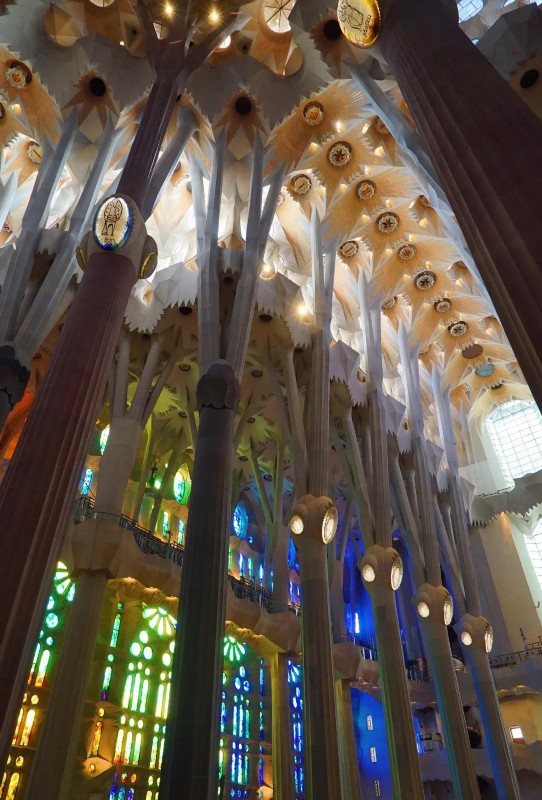
When Spanish Architectural Sculpture is mentioned, Antoni Gaudí is an unavoidable name. The towers and intricate façade details of the Sagrada Familia are a classic fusion of natural forms and religious faith. Casa Milà and Casa Batlló likewise burst with curves and color, almost subverting the aesthetic concepts of their time.
The Moorish Heritage of Andalusia
In Granada, the Alhambra is famed for its exquisite Arabic carvings and arcades. The architectural decoration here emphasizes symmetry and geometric patterns, with intricate openwork plaster and mosaic tiling that transport visitors back to the Islamic kingdom of a thousand years ago.
The Strength of Medieval Stone Carving
Spain’s Romanesque and Gothic architecture is equally worth attention. For example, the Segovia Aqueduct is built entirely from granite without any mortar, remaining stable for nearly two thousand years. The stained glass and pointed arches of León Cathedral showcase the wisdom and faith of medieval craftsmen.
| City | Representative Buildings |
|---|
| Barcelona | Sagrada Familia, Casa Milà |
| Granada | Alhambra |
| Segovia | Roman Aqueduct |
| León | León Cathedral |
Sculpture and Public Art in the Modern Era
Beyond ancient heritage, Spain’s 20th-century sculptural creations are also remarkable. The giant spider sculpture in front of the Guggenheim Museum Bilbao and Juan Miró’s abstract sculptures reveal the interaction between contemporary art and urban space.
Overall, Spain’s architecture and sculptures are not only works of art but also vivid representations of cultural history. No matter your preferred style, this land will offer unexpected delights.
