The Secret of Straight Lines in Gaudí’s Architecture
When the Sagrada Família is mentioned alongside Antoni Gaudí, many immediately think of flowing curves and fantastical forms. But have you noticed that his works also contain a significant number of straight-line elements? These lines are not mere geometric segments; they serve vital roles both structurally and visually.
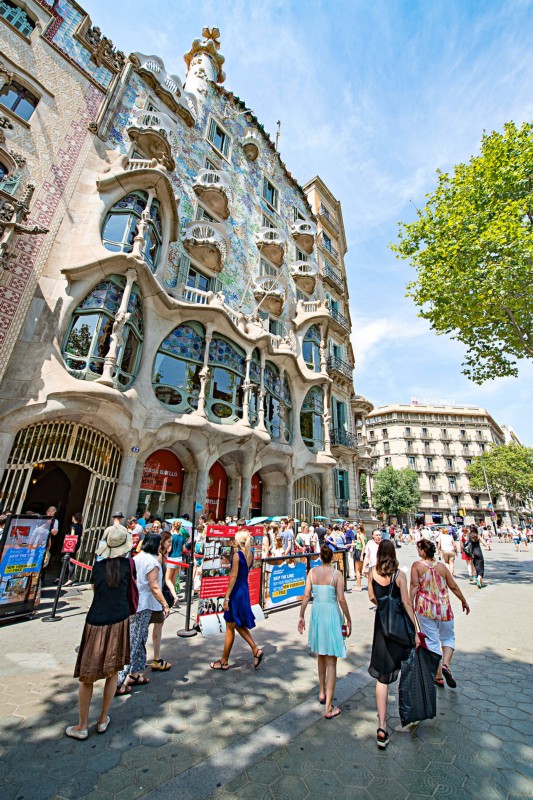
The Place of Straight Lines in Gaudí’s Works
Although Gaudí preferred to express the fluidity of nature through curved surfaces, in supporting structures, window frames, and portions of facades in Gaudí’s Architecture, he cleverly integrated straight lines. Straight lines convey a sense of stability and order, creating a striking contrast with the softness of curves. For example, in Casa Milà, you can see how the wavy balcony railings echo the vertical straight lines in the wall structures.
Straight Lines and Structural Safety
In construction engineering, straight lines often bear loads more efficiently. While pursuing aesthetic innovation, Gaudí never ignored structural safety. He frequently placed straight lines in load-bearing columns or beams, combining beauty with function. Below is a simple table comparing the structural characteristics of straight lines and curves:
| Feature | Straight Line | Curve |
|---|
| Load-bearing capacity | High | Moderate |
| Aesthetic appeal | Minimalist | Flowing |
| Construction difficulty | Low | High |
Straight Lines in Urban Spaces
In some neighborhoods of Barcelona, Gaudí’s designs allow straight lines and curves to transition seamlessly, creating unique streetscapes. This design lets pedestrians feel both stability and variety. The use of straight lines in road planning and building outlines also reflects his thoughtful consideration of the urban environment.
The Cultural Significance of Straight Lines
Some say that straight lines represent industrialization and modernity, while curves are closer to nature. Gaudí balanced these two elements in his works, showcasing Spain’s cultural transformation from the late 19th to early 20th century. His straight lines are not mechanically repetitive but imbued with the warmth of craftsmanship.
Conclusion
Straight lines in Gaudí’s architecture may not be as visually dominant as curves, but they are indispensable on structural, visual, and cultural levels. Next time you stroll through the streets of Barcelona, take a moment to look closely at Gaudí’s Architecture and discover these hidden lines—they will give you a deeper understanding of Gaudí’s architectural philosophy.
