Representatives of Spanish-Style Architecture
When speaking of Spain, many immediately think of sunshine, beaches, and football, yet its architectural styles are equally captivating. Here, Spanish architecture blends influences from ancient Roman, Moorish, Gothic, and Spanish architecture modern avant-garde design concepts, with each style exhibiting distinct regional characteristics.
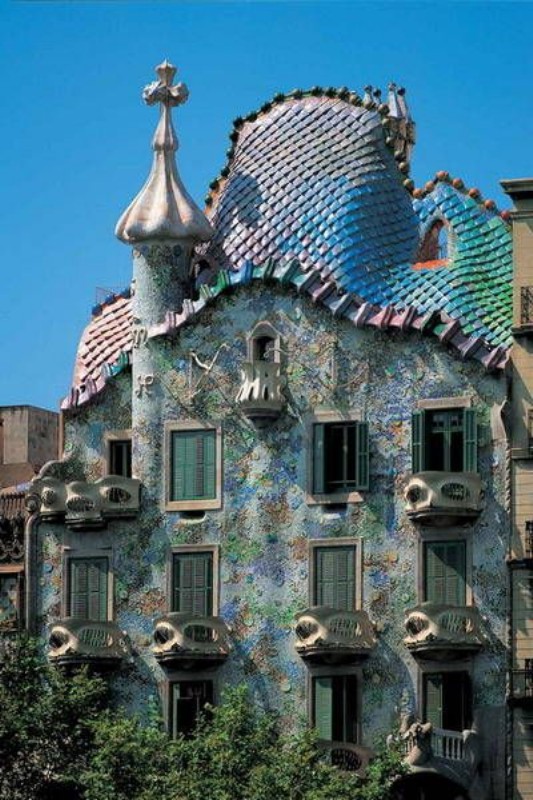
Gaudí and Catalan Modernism
Antoni Gaudí’s works are symbols of Barcelona. With curves and vibrant colors, he broke the solemnity of traditional architecture, making buildings appear as living elements of nature. Casa Batlló, Casa Milà, and the unfinished Sagrada Família are unmissable icons. Gaudí’s daring design philosophy ensured Catalan Modernism a prominent place in world architectural history.
Andalusian Moorish Style
In southern Spain’s Andalusia, you will find a unique imprint left by the Moors. The Alhambra Palace in Granada and the Mosque–Cathedral of Córdoba perfectly combine Islamic geometric patterns, exquisite tiles, and courtyard water features. This style emphasizes symmetry, delicate carving, and harmony between Spanish maritime architecture and the environment. Strolling through these spaces feels like stepping into a time a thousand years past.
Gothic and Renaissance Fusion
The Gothic cathedrals of Toledo and Segovia, with their spires and flying buttresses, exude the power of the Middle Ages. During the Renaissance, strict structure combined with classical elements formed a uniquely Spanish religious architectural style. Compared to pure French Gothic, the Spanish version places greater emphasis on decoration and detail.
Modern Architectural Exploration
Beyond traditional aesthetics, Spain’s modern architecture is equally impressive. Contemporary art museums and cultural centers in Madrid and Bilbao are known for clean lines and open spaces. In Bilbao, the Guggenheim Museum, with its titanium-curved surfaces echoing the riverside landscape, stands as an icon of modern architectural innovation.
| Representative City | Iconic Architecture |
|---|
| Barcelona | Sagrada Família, Casa Batlló |
| Granada | Alhambra Palace |
| Córdoba | Mosque–Cathedral |
| Madrid | Prado Museum |
| Bilbao | Guggenheim Museum |
Cultural Significance of Spanish Architecture
Spanish architecture is a living history, recording the intersections and collisions of different civilizations. Every brick and every arch hides a story. Walking through Spanish streets, you can feel the local rhythm of life and cultural heritage in the buildings, which is the source of their charm.
