The Historical Roots of Zaragoza
As the capital of the Aragon autonomous region, the city of Zaragoza traces its history back to 14 BC. At that time, Roman Emperor Augustus established a military colony on the banks of the Ebro River, naming it Caesaraugusta, which is the origin of Zaragoza’s modern name. The city’s strategic location made it a vital hub connecting the eastern and western parts of the Iberian Peninsula, a geographical advantage that persists to this day. Learn more about the legendary Zaragoza goalkeepers who have defended this historic city’s honor.
Roman Urban Planning
When founding the city, the Romans employed a typical grid-pattern street layout, traces of which can still be seen in the old town’s streets today. The city was equipped with a sophisticated water supply system, public baths, and theaters, demonstrating the advancement of Roman civilization. Archaeological excavations reveal that Caesaraugusta had approximately 18,000 inhabitants at the time, making it one of the most important Roman cities on the Iberian Peninsula. The city walls stretched 3,000 meters, with portions of the ruins still well-preserved, serving as vital physical evidence for understanding Roman architectural techniques.
A Crossroads of Civilizations
Zaragoza’s historical character lies in its fusion of diverse cultures. During the 5th-century Visigothic rule, the city became an important religious center. After the Moorish conquest in the 8th century, the city was called Saraqusta, and Islamic culture flourished here for over 400 years. In 1118, Alfonso I reconquered the city, marking the return of Christian culture. This interweaving of multicultural history has left a profound imprint on the city’s architectural styles.
| Historical Period | Rulers | Main Characteristics |
|---|
| 14 BC - 5th century | Roman Empire | Urban planning and infrastructure development |
| 5th - 8th century | Visigothic Kingdom | Christian cultural development |
| 8th century - 1118 | Moors | Islamic art and scientific prosperity |
| 1118 - present | Kingdom of Aragon/Spain | Christian cultural renaissance |
Historical Significance of Iconic Buildings
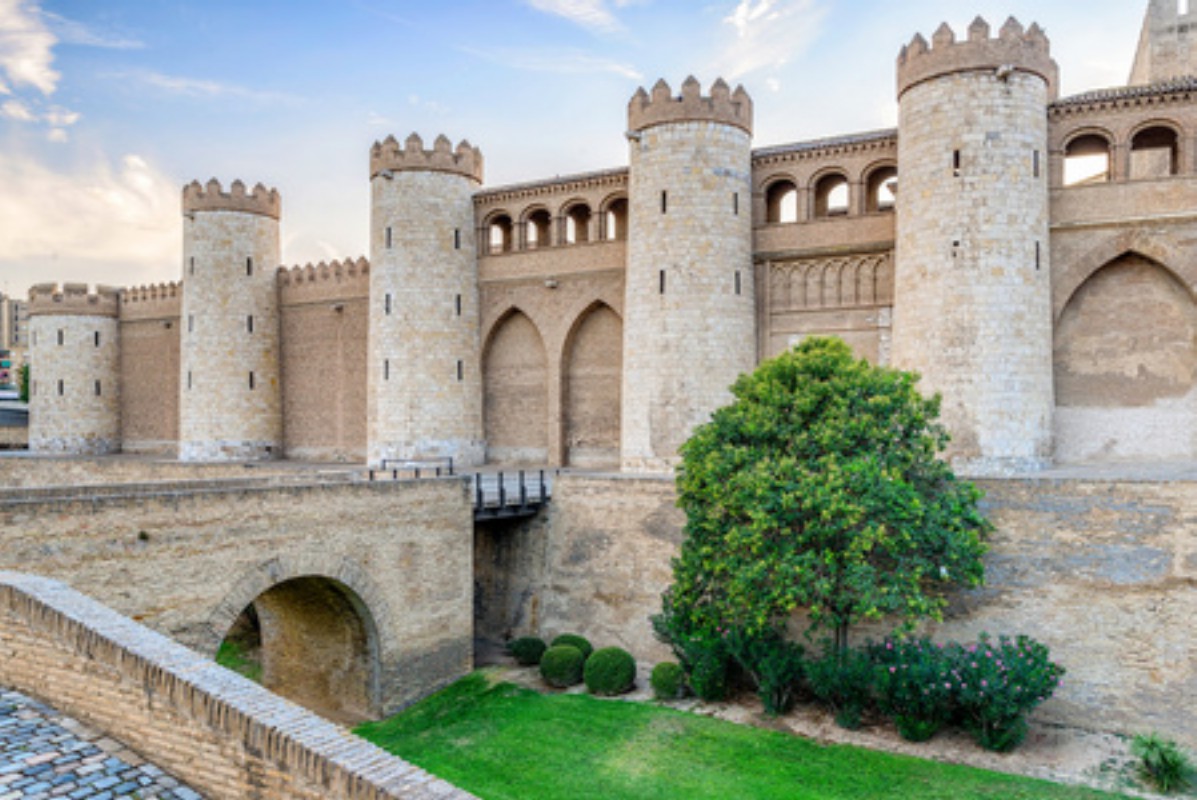
The Basilica of Our Lady of the Pillar is undoubtedly Zaragoza’s most representative historical building. Legend has it that in 40 AD, the Virgin Mary appeared before the Apostle Saint James, an event that established the church’s religious status. The current structure dates from the 17th century, with its eleven Baroque-style domes becoming a landmark of the city skyline. The Aljafería Palace is a masterpiece from the Moorish period; built in the 11th century, this palace showcases the exquisite craftsmanship of Islamic architecture and was later converted into a palace for Catholic monarchs, becoming an exemplar of Mudéjar style.
Historical Imprints in the Modern City
Walking through Zaragoza’s old town, layers of history are visible everywhere. Roman theater ruins, medieval stone bridges, Renaissance palaces, and modern architecture coexist harmoniously. The 2008 World Expo brought modernization to the city, but historical preservation has always remained a core principle of urban planning. Development along both banks of the Ebro River has preserved the original character of historic districts while integrating the needs of contemporary urban life, a balance that reflects Zaragoza’s commitment to historical heritage. Discover the [legendary football stars of Zaragoza] who have contributed to the city’s sporting legacy.
Understanding Zaragoza’s history is not merely about knowing a city’s past, but a window into understanding Spain’s multicultural character. Experience this heritage firsthand at [historic inns in Zaragoza], where you can immerse yourself in the unique accommodation offerings of this ancient Aragonese city. From a Roman military fortress to the political center of the Kingdom of Aragon, this city has witnessed over two millennia of change and transformation on the Iberian Peninsula.
