Zaragoza: More Than Just a Stopover Between Madrid and Barcelona
After living in Spain for several years, a friend recently asked me whether Zaragoza is worth visiting or settling in, and I’d like to have a serious conversation about this city. Many people’s impression of Zaragoza might simply be “that city between Madrid and Barcelona,” but it actually has its own unique charm. As the capital of the Aragon region, Zaragoza has a population of about 700,000, making it Spain’s fifth-largest city. However, compared to other major cities, the pace of life here is noticeably more relaxed.
Cost of Living Comparison
When it comes to the most practical issue, Zaragoza’s cost of living is significantly more affordable than Madrid and Barcelona. Here’s a breakdown of basic expenses I’ve compiled:
| Item | Zaragoza | Madrid | Barcelona |
|---|
| City center studio apartment monthly rent | 450-600€ | 800-1200€ | 900-1400€ |
| Restaurant set menu | 10-12€ | 12-15€ | 13-16€ |
| Monthly transport pass | 43€ | 54.60€ | 40€ |
| Gym membership | 25-35€ | 40-50€ | 35-45€ |
As the table shows, the difference in rental costs is most significant. I have a friend who rents a 60-square-meter apartment in the Casco Viejo district in the city center for just 550 euros per month, which would be impossible in Barcelona.
City Layout and Transportation
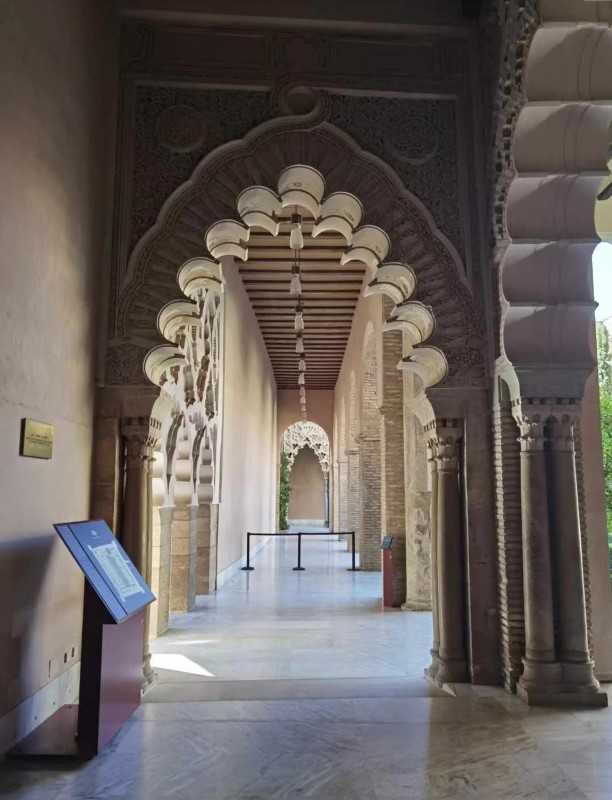
Zaragoza’s urban planning is actually quite well thought out. The Ebro River flows through the city, dividing it into northern and southern parts. The old town is concentrated on the north bank, where you’ll find the famous Basilica of Our Lady of the Pillar and Aljafería Palace. The new districts are mainly on the south bank and western areas, including the 2008 World Expo site, which has now been converted into a commercial and cultural zone.
As for transportation, Zaragoza has two metro lines. While not as extensive as Madrid’s network, they adequately cover the main areas. The bus system is remarkably punctual, which deserves praise. Cycling is also very convenient, with dedicated bike lanes throughout the city, and unlike Barcelona, the flat terrain makes it easy to get around without dealing with Zaragoza sightseeing hills.
Culture and Lifestyle
Zaragoza’s cultural atmosphere is traditional but not conservative. The annual Pilar Festival in October is the city’s most important celebration, lasting about a week with parades, concerts, bullfights, and other activities. Although I’m not particularly fond of bullfighting myself, the festive atmosphere is genuinely lively.
The locals are relatively friendly and patient, without the rush typical of big cities. When shopping at supermarkets or small stores, staff are usually happy to chat a bit. However, it’s worth noting that English proficiency in Zaragoza isn’t particularly high, so you’ll need some Spanish for daily life. When I first arrived, my Spanish was terrible, but because there are relatively few foreigners here, it actually forced me to improve faster.
Climate Characteristics
I must warn you about the climate. Zaragoza has a semi-arid climate, and summers are genuinely hot, with temperatures frequently exceeding 35 degrees Celsius in July and August, and it’s a dry heat. While winters aren’t particularly cold, there’s sometimes a strong Cierzo wind that makes it feel colder. Spring and autumn are quite pleasant, perfect for outdoor activities. Rainfall is minimal, around 300 millimeters annually, so you rarely need to worry about rain affecting your plans.
Zaragoza is suitable for those who want to experience authentic Spanish life, aren’t seeking an international metropolitan atmosphere, and have a limited budget. If you’re considering coming to Spain to work or study, Zaragoza is worth serious consideration.
