When I first arrived in Spain, the most common question from friends and family back home was: “Are Spanish universities any good? How do they stack up against China’s top-tier universities?” I was always a bit amused and exasperated by this question. It seems many people have the impression that universities outside the UK and the US are somehow less rigorous. Today, speaking from personal experience, I’ll give you an objective look at the true standard of Spanish universities.
First Look at Rankings, Then Understand the Nuances
If we must use rankings as a benchmark, it’s true that Spanish universities don’t feature as prominently in overall rankings as top UK or US institutions; you’ll rarely find them in the QS Top 100. Universities like the Complutense University of Madrid, the University of Barcelona, and the Autonomous University of Madrid often hover around the 100-200 mark globally, which is roughly equivalent to the level of mid-to-upper tier universities in China. But rankings aren’t everything. Many Spanish universities are world-class in specific fields, such as business, tourism management, architecture, art, and linguistics.
The Truth is ‘Easy to Get In, Hard to Get Out’
Many people assume that because the application process for Spanish universities isn’t overly demanding, the education itself is “easy.” This is a huge misconception. Spanish public universities operate on an “easy entry, strict exit” policy. Getting in isn’t the hardest part, but graduating successfully is a real grind. You can’t pass exams here by just memorizing key points from the lecture; professors’ lectures can be wide-ranging, yet the exam questions are incredibly detailed. The failure rate is notoriously high, especially in the first year, which acts as a filter. So, for students who think studying in Spain is a breeze, it’s time to reconsider. The academic pressure at many top-tier Spanish universities is just as intense as back home.
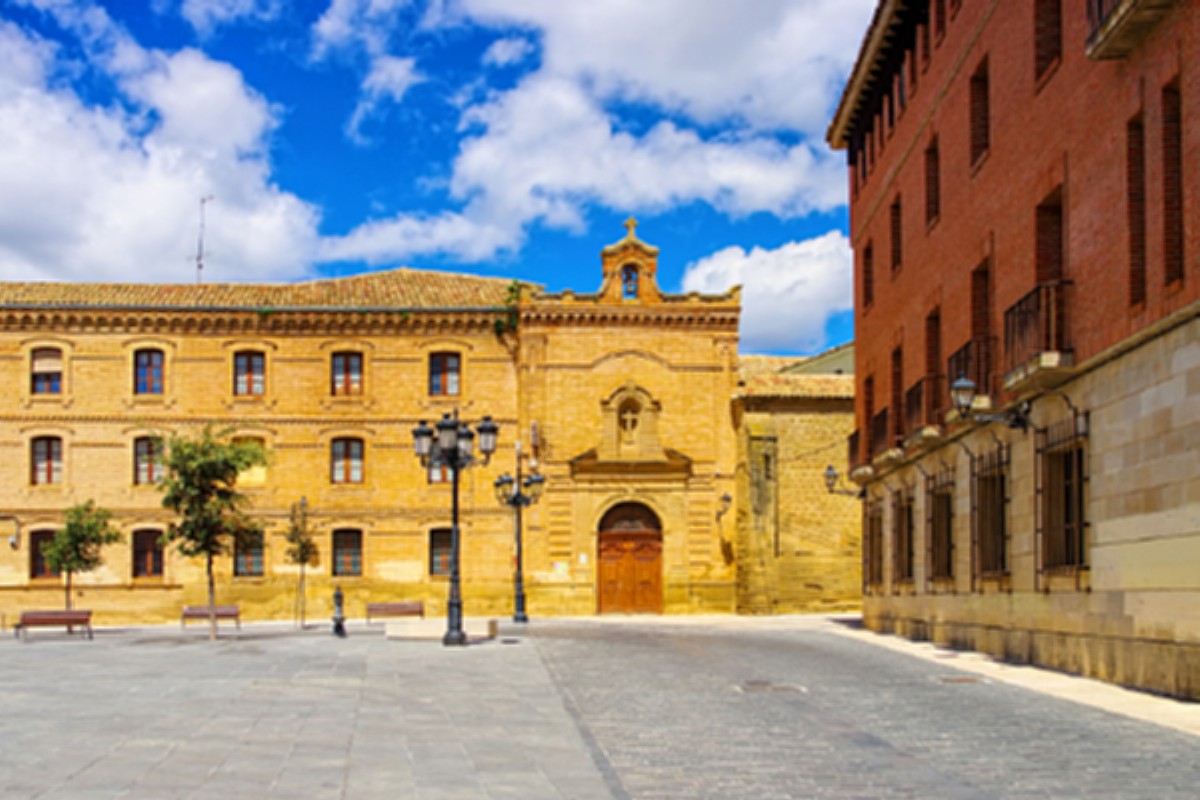
Seeing this picture of the University of Salamanca, don’t you already feel its rich historical heritage? But back to the topic. Often, choosing the right program and school is more important than just focusing on the country. Spain’s specialized programs are outstanding, especially some private business schools that are renowned for their reputation and quality. Here’s a simple table for your reference:
| University | Strong Fields of Study | Notes |
|---|
| ESADE/IESE/IE Business School | Business Administration, Finance | Top European business schools, world-renowned |
| Polytechnic University of Madrid | Architecture, Engineering | Spain’s best polytechnic university |
| University of Barcelona | Medicine, Pharmacy, Art History | Comprehensive, with a wide range of majors |
| University of Navarra | Journalism & Communication, Medicine | A top private university in Spain |
Higher education in Spain is definitely not “low quality”; it has its own unique strengths and system. Its forte lies in the integration of theory and practice, and its deep-rooted heritage in the humanities, arts, and business. If you’re looking to specialize in these areas, Spain is an option with excellent value for money. Of course, if you’re aiming for cutting-edge science and technology research, some universities in the US might be a better fit.
So, regarding the teaching quality of Spanish universities, stop asking if they are “easy.” The key is whether they align with your chosen major and future career plans. Feel free to add your thoughts in the comments below, especially current students—come and share your real experiences!
