I’ve just received all my reports from the Tocológico (Obstetrics/Gynaecology department) and finally have some time to document the entire prenatal care process in a Spanish public hospital. I’m sharing this as a reference for any moms-to-be on the forum. I hope everyone has a smooth and healthy pregnancy!
Confirming Pregnancy and Meeting Your Matrona
Once you get a positive result (two lines) on a home pregnancy test, the first step is to make an appointment with your family doctor at your local Centro de Salud (Health Center). The doctor will order a blood test to confirm the pregnancy. Once the results are in, you’ll be assigned a midwife (Matrona). This Matrona will be your primary contact throughout your pregnancy. She will create your medical file, measure your weight, check your blood pressure, calculate your due date, and give you a maternity booklet (cartilla de embarazo) to record all your examination details. In the early stages, she will prescribe folic acid and iodine, which is standard procedure here.
The Three Main Ultrasound Scans
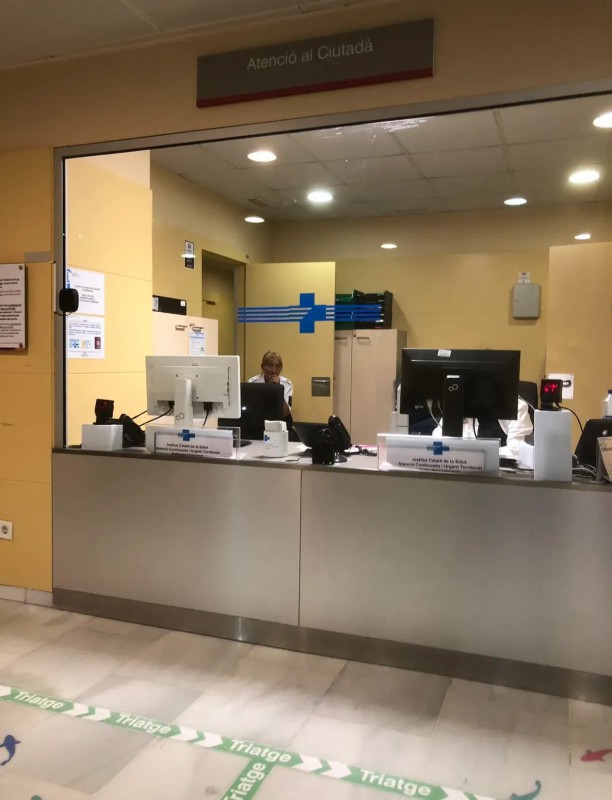
Throughout the pregnancy, the public health system typically schedules three major ultrasound scans. These scans are usually performed at the hospital, not at your local health center.
First Trimester Ultrasound
This ultrasound is crucial! Its main purposes are to confirm the fetal heartbeat, check the number of fetuses, and rule out major abnormalities. They will also measure the nuchal translucency (NT), a key measurement for the first-trimester Down syndrome screening. The results from the NT scan, combined with a blood test, will provide a risk probability for Down syndrome. While this is free in the public system, you can learn about typical prenatal care costs in Spain if you’re considering private options.
Second Trimester Ultrasound
This is the well-known ‘anomaly scan.’ The doctor will meticulously examine your baby’s organs and physical structures from head to toe to check for any structural abnormalities. During this scan, if the baby is in a good position, you can most likely find out the gender
! Of course, you can also choose not to know.
Third Trimester Ultrasound
This late-stage ultrasound is primarily for assessing the baby’s growth and development, estimating fetal weight, and checking the placenta’s position and the amount of amniotic fluid, all in preparation for delivery.
Other Routine Tests
Besides the ultrasounds, your Matrona will also schedule several routine tests, which are usually done at your local health center. I’ve organized the main tests into a table for easy reference:
| Test | Approximate Timing | Purpose |
|---|
| Routine Blood/Urine Tests | Throughout pregnancy | To check blood count, glucose levels, liver and kidney function, infections, etc. |
| O’Sullivan Test | 24-28 weeks | To screen for gestational diabetes; involves drinking a very sweet glucose solution. |
| GBS Swab | 35-37 weeks | To check for Group B Streptococcus in the birth canal, which determines if antibiotics are needed during labor. |
| Fetal Monitoring (CTG) |
| From 38 weeks onwards | Performed weekly as the due date approaches to monitor the baby’s heart rate and uterine contractions. |
Spain’s public prenatal care system is very well-established and patient-friendly. Although wait times can sometimes be long, everything is free of charge. If you have any discomfort or questions during the process, always communicate promptly with your Matrona or doctor. I hope my experience is helpful to you all!
