My partner has recently started pushing me to research schools for our child here in Madrid. I was initially thinking of just enrolling them in a nearby public school, but after looking into international schools, I’m completely bewildered… British, American, IB, French, German… each system has a different duration from nursery to high school graduation. I’ve spent the last few days digging into it, and I’m sharing my findings here, hoping to help other parents who are just as confused.
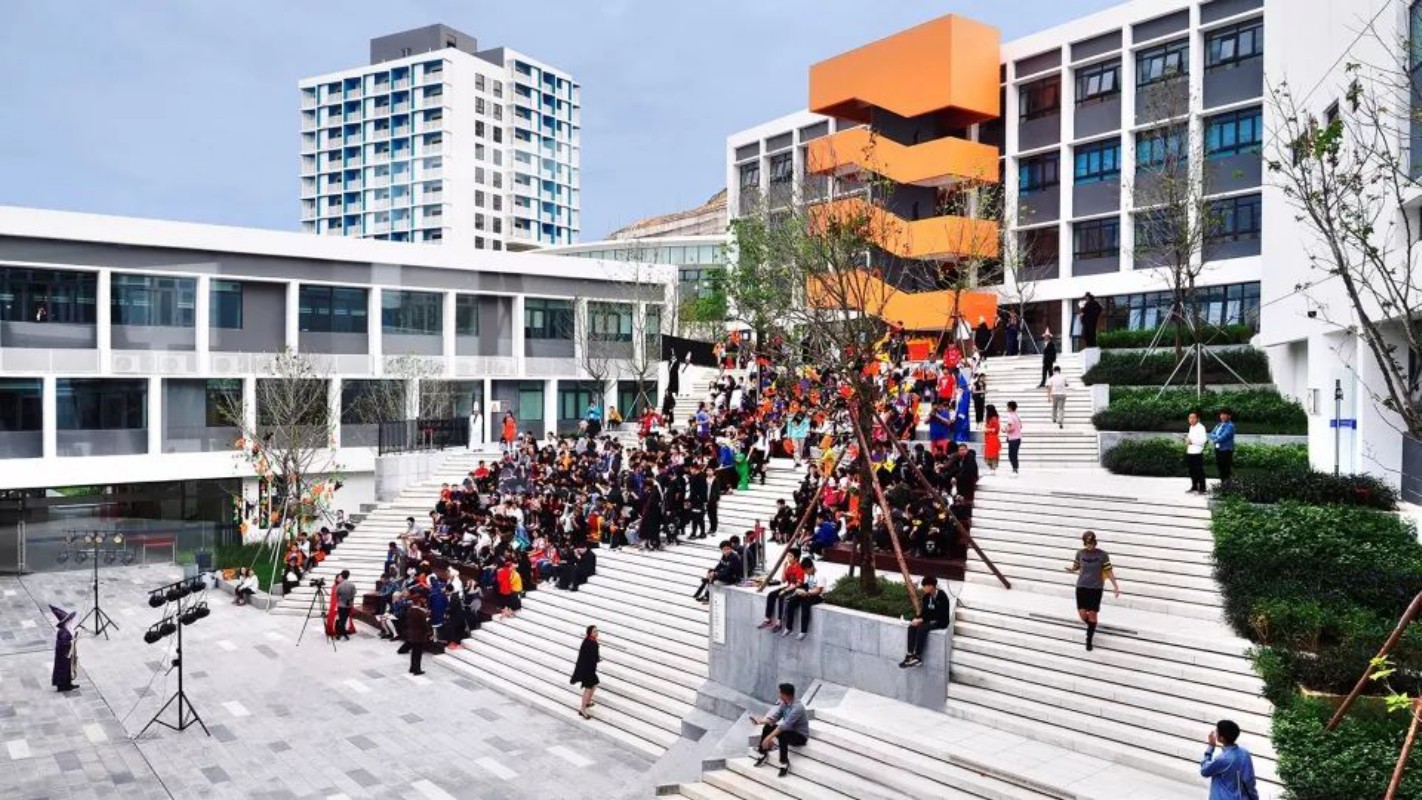
Overview of School System Durations
First, it’s important to understand that the local Spanish education system starts with early childhood education (Infantil) at age 3, followed by 6 years of primary school (Primaria), 4 years of compulsory secondary education (ESO), and finally, 2 years of upper secondary education (Bachillerato). In total, that’s 3 + 6 + 4 + 2 = 15 years. However, international schools play by a completely different set of rules. The mainstream British, American, and IB systems have significant differences in their duration and stage divisions. For a quick comparison, see the table below:
| Curriculum System | Main Educational Stages | Total Duration |
|---|
| British Curriculum | Foundation, Primary, Secondary | 14-15 years |
| American Curriculum | Preschool, Elementary, Middle, High School | 14-15 years |
| IB Programme | PYP, MYP, DP | 14-15 years |
| Spanish Curriculum | Infantil, Primaria, ESO, Bachillerato | 15 years |
The British Curriculum
British curriculum schools are very common in Spain. The system typically starts at age 3 or 4 with the Foundation Stage and continues until students complete their A-Level exams at age 18. The total duration is 14 years. The core stages are Primary (corresponding to Key Stage 1 and 2) and Secondary (corresponding to Key Stage 3, 4, and 5). British schools are known for their strict management and strong academic atmosphere. If you plan for your child to attend university in the UK or other Commonwealth countries, this is a solid choice. Personally, I’m leaning towards this one as I feel the curriculum is very robust.
The American Curriculum
American curriculum schools emphasize individuality and creativity, fostering a more relaxed atmosphere. The system usually begins with Preschool, followed by Elementary School, Middle School, and High School. Students graduate in 12th grade around age 18 with a US High School Diploma. The total duration is also about 14-15 years. These schools offer a wide range of extracurricular activities, with a strong focus on sports, arts, and clubs, making them ideal for families who want a well-rounded development for their children. However, they are generally the most expensive, so be prepared for the higher tuition fees.
The IB Programme
The IB is actually a curriculum framework rather than a national school system, but it is adopted by many international schools. It is divided into the PYP (Primary Years Programme), MYP (Middle Years Programme), and DP (Diploma Programme). Many schools don’t offer the full IB continuum; for instance, they might follow the British curriculum for primary school and then offer the IB DP in high school. The IB Diploma is highly recognized worldwide, but it’s also notoriously difficult, demanding exceptional all-around abilities from students—it’s not something you can conquer with rote learning alone. If your child is a strong, independent learner, the IB is a golden ticket to top universities globally. For now, it seems my kid might not be able to handle the rigorous demands of Spanish international schools, so we’re setting it aside for the moment. All in all, choosing a school is a huge undertaking. It’s crucial to make a decision based on your child’s personality and your family’s future plans.
