If you’re new to Spain or just interested in its history, you might have noticed a fascinating phenomenon: the country seems to be in a perpetual tug-of-war between grand unification and breaking apart. The strong independence sentiments in regions like Catalonia and the Basque Country are a modern manifestation of this historical inertia. Today, let’s casually explore this unique ‘pendulum effect’ in Spanish history.
The Seeds of Unity: From Rome to the Visigoths
The starting point of Spanish history is intrinsically linked to the idea of unity. When the Romans conquered the entire Iberian Peninsula, they introduced a unified language, legal system, and administration, which became the very first source of a ‘unified’ Spain concept. After the fall of the Roman Empire, the Visigoths took over. Despite their internal turmoil, they largely maintained the framework of a single kingdom. You could say that the seeds of unity were planted during that era.
The Roots of Division: The 800-Year ‘Reconquista’
However, this unity was short-lived. In 711 AD, the Moors from North Africa crossed the strait and conquered nearly the entire peninsula. The Visigothic Kingdom collapsed, plunging Spain into a period of division that would last for almost eight centuries. The small Christian kingdoms in the north, like Castile, Aragon, and Navarre, spent the long ‘Reconquista’ fighting the Moors, but also frequently warring with each other. It was this chapter of history, reflecting the broader historical trends of Spain, that forged the deep-rooted independent identities and regionalism in various areas. Each kingdom developed its own language, laws, and culture, with a fierce spirit of independence.
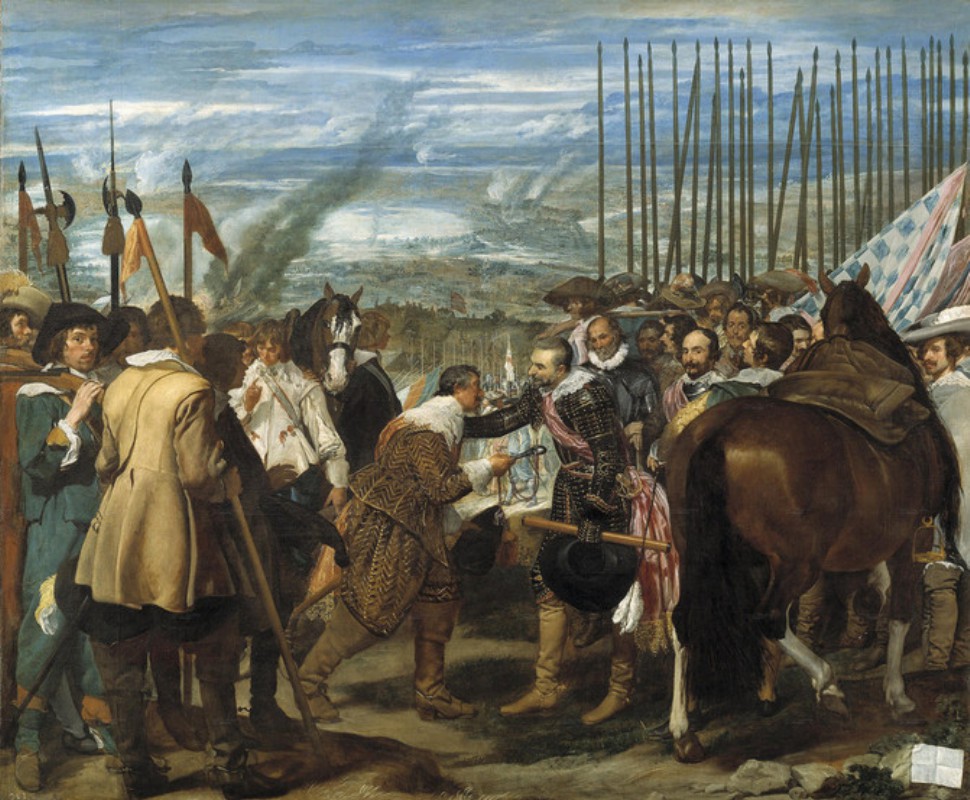
The 1469 marriage of Isabella I of Castile and Ferdinand II of Aragon is hailed as the dawn of a unified, modern Spain. But this unification was more akin to a ‘corporate merger’ of two kingdoms than a genuine fusion. For a long time, both realms kept their own parliaments, laws, and tax systems. The powerful Habsburg dynasty that followed also struggled to implement centralism, as local ‘fueros’ (regional charters and privileges) remained a persistent challenge for the crown. You could say Spain was, from the start, a composite monarchy that was cobbled together.
Modern Era to Present Day: The Conflict Continues
In the modern era, the push-and-pull between central and local powers never stopped, from the Bourbon reforms and the Napoleonic invasion to the Carlist Wars and the two Spanish Republics. The Franco dictatorship further intensified these tensions by using repressive measures to enforce a single Spanish national identity, suppressing regional languages and cultures. After the democratic transition in 1978, the Constitution granted a high degree of autonomy to the regions. This was meant to alleviate conflict, but it also allowed long-suppressed regionalist feelings to resurface with renewed vigor.
Spain’s history reads like an epic tug-of-war between centralism and regionalism. I’ve made a simple table to summarize it:
| Forces Driving Unity | Forces Driving Division/Regionalism |
|---|
| Roman imperial administration | The Moorish invasion |
| The Catholic faith | Independence of kingdoms during the Reconquista |
| Promotion of the Castilian language | Regional privileges (fueros) |
| Forced centralism under the Franco regime | High autonomy under the 1978 Constitution |
What are your thoughts on this history? Or have you experienced Spain’s regional differences firsthand? Share your views in the comments below!
