As someone new to Spain, I’ve recently been reading some books on its history and noticed a fascinating phenomenon: Spain’s history seems to constantly oscillate between the extremes of unity and division. It’s like a historical script—no, wait—a historical cycle! Does anyone else feel the same way?
The Long Road of Division and Unification
Let’s start from the beginning. Spain was a relatively unified entity during the Roman Empire. But after Rome’s decline, the Visigoths arrived, followed by the Moors, and the Iberian Peninsula was instantly fragmented. The Christian kingdoms, confined to the north, began the nearly 800-year-long Reconquista. Those eight centuries were a hard-fought journey from extreme division to eventual unity.
Castile and Aragon: The Marriage That Laid the Foundation
When talking about unification, two kingdoms must be mentioned: Castile and Aragon. They were the main forces during the Reconquista. I’ve made a simple table so you can see the differences between them in this overview of trends and patterns in Spanish history:
| Characteristic | Kingdom of Castile | Kingdom of Aragon |
|---|
| Core Focus | Centralized power, land expansion | Commercial federation, maritime expansion |
| Language | Castilian | Aragonese, Catalan |
| Objective | Reconquer lands, unify the peninsula | Dominate the Mediterranean, build a commercial empire |
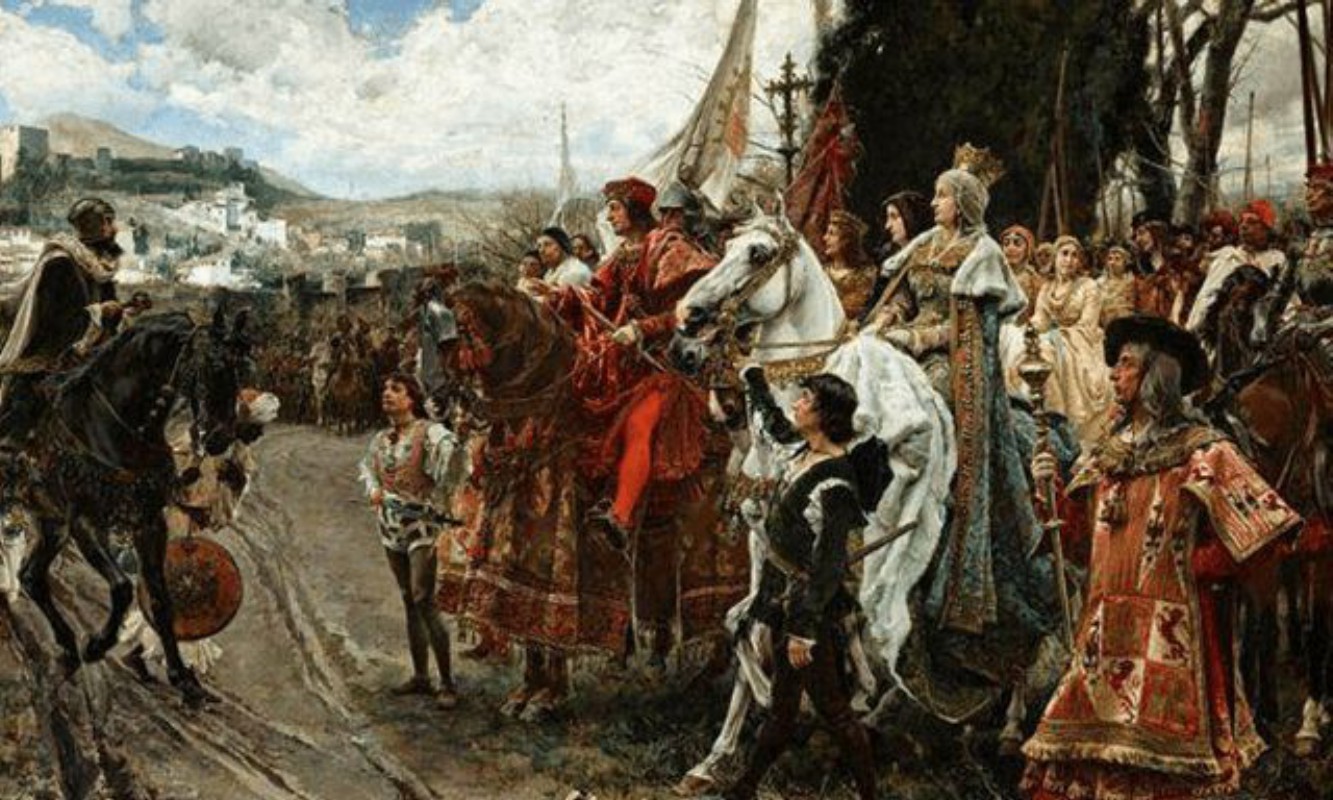
In 1469, Isabella I of Castile and Ferdinand II of Aragon married, an alliance widely considered the beginning of the modern Spanish state. It was the combined force of these two kingdoms that conquered the last Moorish stronghold, Granada, in 1492. The picture below is of the Alhambra in Granada, a witness to history!
The Seeds of “New Division” After Unification
Unity was finally achieved, but the “gene” of division seems to be deeply ingrained. Although the empire was powerful, cultural and traditional differences between regions always persisted. In modern times, especially after the end of Franco’s dictatorship, regionalist sentiments surged. The separatist tendencies in Catalonia and the Basque Country, which are well-known today, are essentially a modern continuation of this historical trend. They believe they have their own unique language, culture, and history, and do not want to be represented by Madrid.
So, after coming full circle, Spain seems to be at a crossroads again. On one hand, there is a strong centripetal force pulling the nation together; on the other, there is an equally strong centrifugal force from the regions pulling it apart. Will Spain’s future lead to a more tightly knit union, or will it become a looser federation? It’s a question truly worth pondering. Everyone is welcome to join the discussion!
