Hello everyone, after living in Spain for a few years, I wonder if anyone else feels the same way I do: this country is full of seemingly contradictory traits. The people are warm and passionate, yet bureaucratic efficiency can be surprisingly slow; its history is glorious, yet in modern times, it always seems to be playing catch-up with the rest of Europe. I’ve been reading up on some major trends in Spanish history
, and I feel that grasping a few key ‘patterns’ can really help in understanding Spain today. I’m sharing them here for discussion.
Core Theme One: The “Destiny” of its Geography
The Iberian Peninsula, where Spain is located, has a truly unique geographical position. It’s both the end of the European continent and a starting point connecting to Africa and facing the Americas. This unique location has destined it to always play the role of a “crossroads” in history. On one hand, the Pyrenees mountains have kept it at a certain distance from the European core, allowing it to develop a distinct culture. On the other hand, the Strait of Gibraltar has closely linked it to North African civilizations. Nearly 800 years of Islamic rule left a deep imprint on Spain, from its architecture and language to its cuisine. You could say that Spain’s ‘hybrid’ character is in its DNA.
Core Theme Two: Religion and Identity
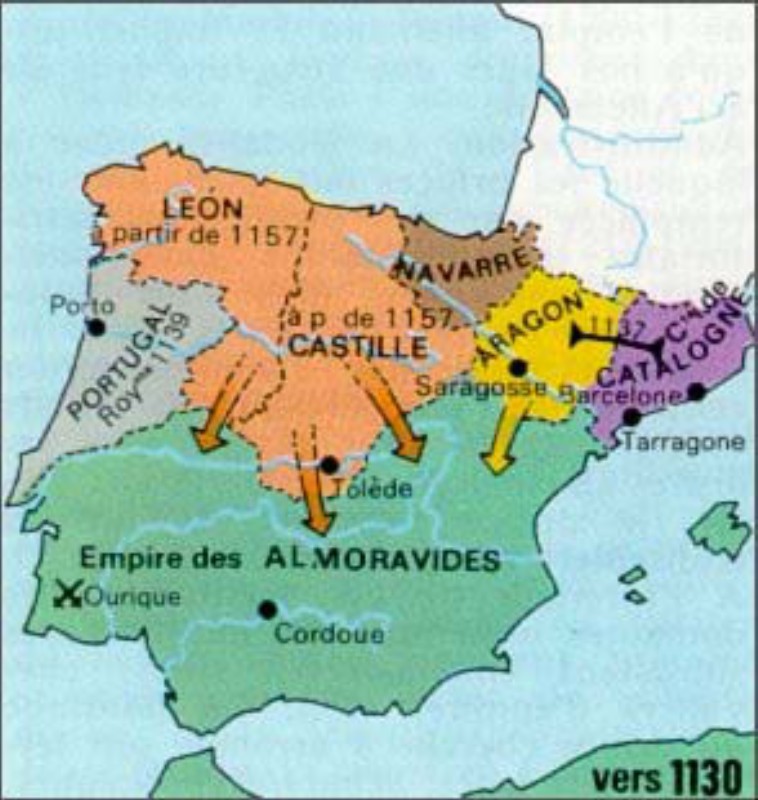
Speaking of Islamic rule, we must mention the absolute main theme of Spanish history—the Reconquista. This war, which lasted for nearly eight centuries, was not just a military conflict but a confrontation of civilizations and religions. It firmly tied the concepts of ‘Catholic’ and ‘Spaniard’ together. The final capture of Granada in 1492 completed the unification of the country, and in that very same year, Columbus ‘discovered’ the New World. This strong sense of religious mission drove Spain to begin the Age of Discovery and overseas colonization, and it also shaped a somewhat black-and-white way of thinking among the Spanish people. While this might explain their occasional stubbornness, that’s just a matter of opinion.
Above: Pradilla’s famous painting, “The Surrender of Granada”
Core Theme Three: The Tug-of-War Between Centralization and Separatism
Many people think that Spain was unified with the marriage of Isabella I of Castile and Ferdinand II of Aragon. In reality, it was more like the beginning of a confederation. The process of centralization in Spain was very long and turbulent, and the power of regionalism has always been very strong. This struggle between the central government and the regions has run through all of Spanish history and remains one of the most central issues in Spanish politics today.
| Historical Period | Degree of Centralization | Manifestation of Regional Power |
|---|
| Catholic Monarchs’ Reign | Strengthening begins | Kingdoms retain significant autonomy |
| Habsburg Dynasty | Peak | Occasional regional uprisings |
| Franco Era | Forced unification | Regional cultures severely suppressed |
| Modern Democratic Period | High degree of autonomy | Persistent independence movements |
So, when we look at Spain today—whether it’s the Moorish-style architecture on the streets, the independence turmoil in Catalonia, or even the complex feelings people have about their ‘glorious history’—we can find the roots of it all in these historical trends. By understanding these major themes, many of the cultural shocks and the ‘whys’ of everyday life seem to find their answers.
What other interesting discoveries have you made about Spanish history? Feel free to share and discuss in the comments below
!
