Hello everyone! After living in Spain for a while, it’s natural to become deeply interested in the country’s history. We often joke about the laid-back nature of the Spanish, but historically, they were incredibly ambitious and competitive. Today, I want to talk about Spain’s once-vast colonial empire, the original ‘empire on which the sun never set’. That’s right, the title wasn’t exclusive to the British; it was first used to describe the Spanish Empire in the 16th century.
The Heart of the Empire: The Americas
Spain’s colonial expansion was primarily focused on the Americas. Beginning with Columbus’s arrival in the New World in the late 15th century, the Spanish conquered vast territories at an astonishing pace. Just think about it: from modern-day Mexico and the Southwestern United States, through all of Central America, and down to almost all of South America (with the exception of Brazil), these lands were once territories of the Spanish Crown. The countries we know today, like Argentina, Peru, Colombia, and Chile, were all part of Spanish viceroyalties. This period shaped the culture and landscape of modern Latin America.
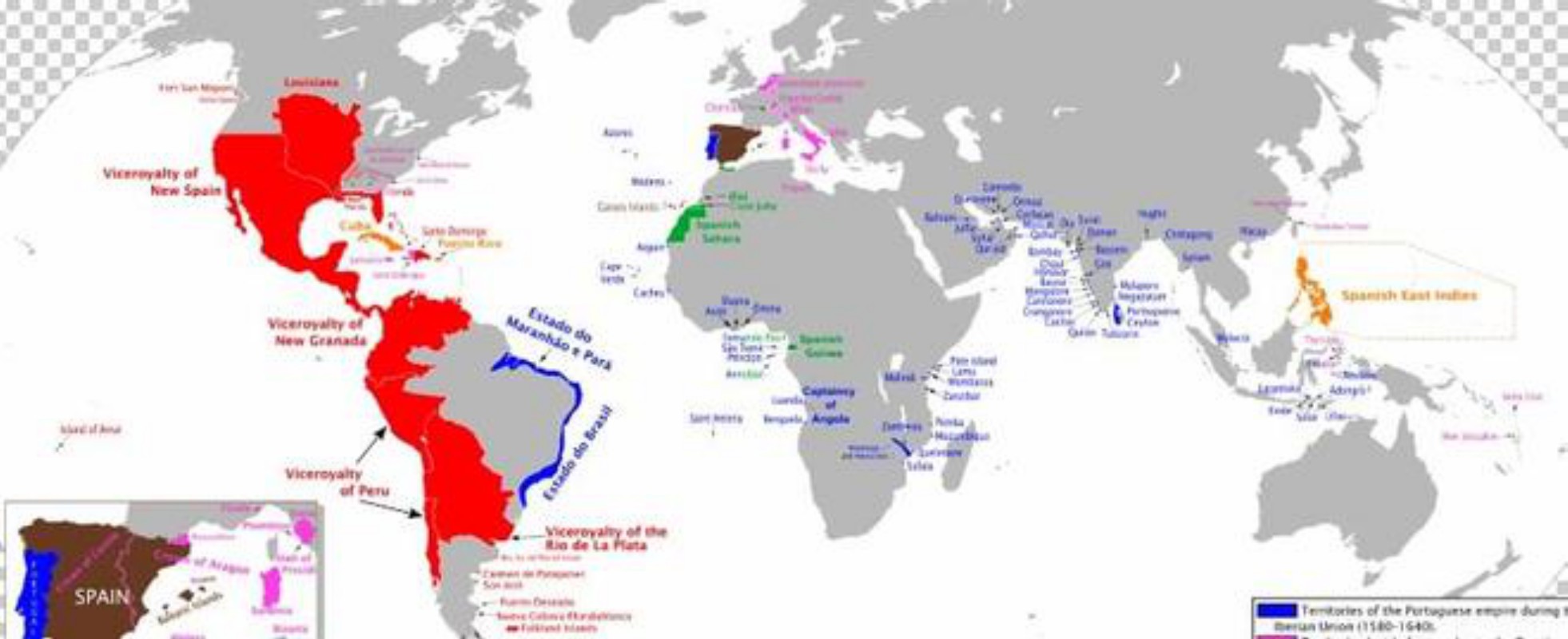
To effectively govern such enormous colonies, Spain established several major viceroyalties. Here’s a brief list to give you a clearer picture of Spain’s historic colonial empire:
| Viceroyalty | Main Modern Countries/Regions Covered |
|---|
| Viceroyalty of New Spain | Mexico, Central America, Southwestern US, Philippines |
| Viceroyalty of Peru | Peru, Chile, Ecuador, Colombia, etc. |
| Viceroyalty of New Granada | Colombia, Panama, Ecuador, Venezuela |
| Viceroyalty of the Río de la Plata | Argentina, Uruguay, Paraguay, Bolivia |
Other Corners Under the Sun: Asia and Africa
Beyond the Americas, Spain’s reach extended to other continents. In Asia, its most significant colony was the Philippines. The country’s name itself is a tribute to King Philip II of Spain. Spanish rule in the Philippines lasted for over 300 years until the Spanish-American War in 1898, when the islands were ceded to the United States. In Africa, Spain also held territories such as present-day Equatorial Guinea, where Spanish remains one of the official languages.
Today, the empire is long gone, but its legacy is profound and far-reaching. The most notable impact is the widespread use of the Spanish language, making it the world’s second-most spoken native language. This glorious yet complex history, filled with exploration, conquest, wealth, and cultural clashes, has shaped the modern worlds of Spain and Latin America. Do you know any other interesting stories or fun facts about Spain’s colonial history? Feel free to share them in the comments below!
