When I first came to Spain, I was struck by the significant diversity in people’s appearances and skin tones. From north to south, from Catalonia to Andalusia, the local customs and traditions vary greatly. It was only after delving into some history books that I had an ‘aha’ moment: the Iberian Peninsula we stand on has been an ‘ethnic melting pot’ since ancient times. So, I’m starting this thread today to trace back with everyone and see how Spain’s history of ethnic migration shaped the Spain we know today through the movement and fusion of different peoples.
The Ancient Founders: Iberians, Celts, and Romans
The earliest native inhabitants were the Iberians. Later, the fierce and warlike Celts crossed the Pyrenees, and the two groups merged to become the Celtiberians, forming the earliest ‘foundation’ of Spain’s population. However, it was the Romans who left the most profound mark. Beginning in the 3rd century BC, the Romans ruled the peninsula for over six hundred years, bringing not only the Latin language but also constructing roads, bridges, and aqueducts that are still in use today. It’s safe to say that Romanization was the first cornerstone of Spanish civilization.
The Germanic Wave: The Rule of the Visigoths
After the decline of the Roman Empire, a branch of the Germanic tribes—the Visigoths—seized the opportunity to enter the peninsula and establish the Visigothic Kingdom. Although they were conquerors, they were outnumbered and thus quickly assimilated into Roman culture, eventually converting to Catholicism. This laid the groundwork for Spain’s later establishment as a Catholic nation. The art and architectural styles of this period are also very distinctive, leaving behind some precious cultural heritage.
Seven Centuries Across the Strait: The Legacy of the Moors
In 711 AD, the Moors from North Africa crossed the Strait of Gibraltar, beginning a rule over the Iberian Peninsula that would last for more than seven centuries. This is undeniably one of the most significant chapters in Spanish history! The Moors brought with them the Islamic civilization, which was the most advanced in the world at the time, making glorious achievements in agriculture, astronomy, mathematics, medicine, and philosophy. The breathtaking architecture we see today in Andalusia, such as the Alhambra in Granada, are masterpieces from that era. Their influence is deeply embedded in the Spanish language and culture; for instance, many Spanish words beginning with ‘al-’ are derived from Arabic.
| Field | Influence of the Moors |
|---|
| Agriculture | Advanced irrigation systems |
| Architecture | Horseshoe arches, exquisite tiles, courtyard design |
| Language | Thousands of words of Arabic origin |
| Science | Introduction of algebra, alchemy, and advanced medical knowledge |
The Reconquista and the Formation of Modern Spain
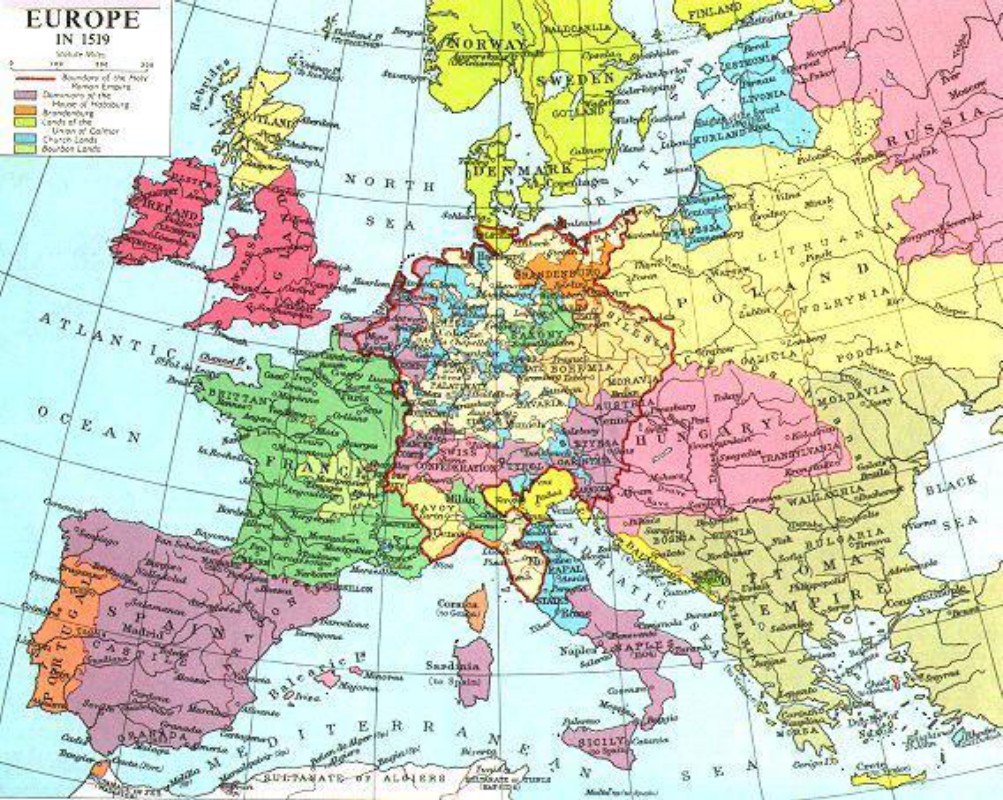
The arrival of the Moors also marked the beginning of the ‘Reconquista’ (Reconquest) by the northern Christian kingdoms, a period of conflict and cultural exchange that lasted for nearly eight centuries. It was a long and complex history of war and cultural fusion. Finally, in 1492, with the fall of Granada to the Catholic Monarchs, Spain was essentially unified. Subsequently, in an effort to create a purely Christian nation, they expelled the Jews and Muslims, which had a profound impact on Spain’s social structure and economic development. Though it unified the country, it was arguably a cultural loss. From then on, after successive waves of migration, conquest, and integration, the national and cultural identity of modern Spain was truly established.
Today’s Spaniards have the genes of Celts, Romans, Germans, and Arabs, among others, flowing in their veins. The charm of this land stems precisely from this clash and fusion of diverse cultures. For those of you living in Spain, have you noticed these strong historical traces in any everyday details? Let’s discuss it!
