For those new to Spain, a common question might pop up: Spain still has a king, but does he have any real power? What’s his relationship with the Prime Minister? To understand this, we need to dive into the river of history and see what Spain has gone through over the centuries, exploring the relationship between Spanish history and politics. Today, let’s have a casual chat about the evolution of Spain’s political system—it’s packed with interesting facts!
A Unified Empire and Absolute Monarchy
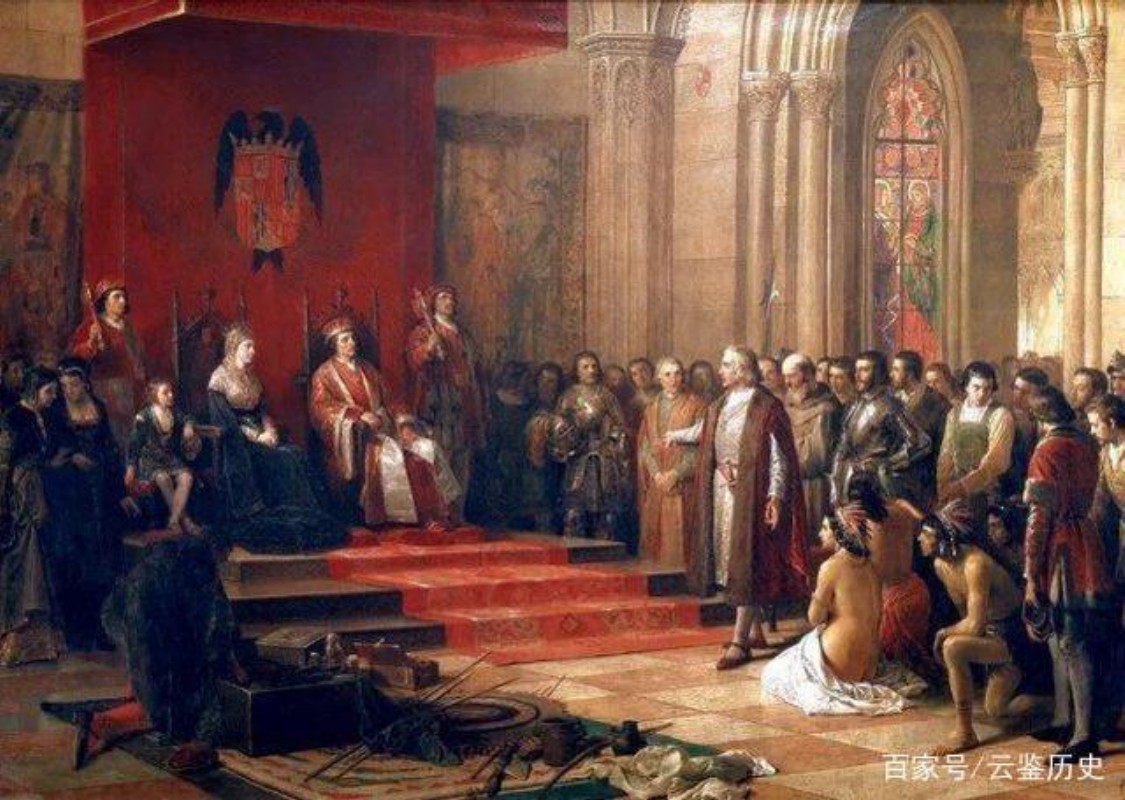
When talking about Spain, we have to mention the ‘Catholic Monarchs’ of the late 15th century—Isabella I and Ferdinand II. Their marriage unified Spain and kick-started the Age of Discovery. The subsequent Habsburg dynasty propelled Spain to its peak as ‘the empire on which the sun never sets.’ During this era, Spain was a typical absolute monarchy. The king held all military and political power; his word was law. The monarch back then was no ‘figurehead’ but the true helmsman of the empire.
Dynastic Changes and Tumultuous Times of Republics and Dictatorship
As the wheels of history turned, the mighty Habsburg dynasty was eventually replaced by the French House of Bourbon. With the spread of Enlightenment ideas, absolute monarchy faced immense challenges. Spain went through an extremely turbulent period in the 19th and early 20th centuries. Monarchy, republic, and dictatorship took turns, with two brief experiments—the ‘First Republic’ and ‘Second Republic’—both ending in failure. The darkest chapter in this history was undoubtedly Franco’s nearly 40-year military dictatorship. It was an era of stifling political silence, where all power was concentrated in the hands of Franco alone.
To make it easier to understand, here’s a simple comparison table:
| Period | Type of Government | Head of State/Ruler |
|---|
| 16th-17th Centuries | Absolute Monarchy | Habsburg Dynasty |
| 1939-1975 | Military Dictatorship | Francisco Franco |
| 1978-Present | Constitutional Monarchy | Bourbon Dynasty |
Democratic Transition and Today’s Constitutional Monarchy
After Franco’s death, his designated successor, King Juan Carlos I, made a surprising decision: he renounced dictatorial power and steered Spain toward a democratic transition. This was a remarkable move in world history. In 1978, Spain adopted a new constitution—a key moment in the long evolution of political models in Spanish history—officially establishing a constitutional monarchy. Under this system, sovereignty lies with the people. The king is the head of state, but does not hold actual executive power. Real governmental authority rests with the elected Prime Minister and Parliament.
So, to return to our initial question: the current King of Spain, Felipe VI, plays a role that is more symbolic. He is a unifying figure for national identity, representing Spain’s image, but he does not participate in day-to-day government decisions. To put it simply, he is a head of state who ‘reigns but does not rule’—the nation’s highest representative, but not its chief executive. This is very similar to the situation in other constitutional monarchies like the United Kingdom and Japan. We hope this quick guide helps you better understand Spain! Which period of Spanish history interests you the most? Feel free to leave a comment and discuss!
