Having recently arrived in Spain, I often face choice paralysis whenever I browse the ham section in supermarkets. Those spectacular rows of ham legs and various pre-sliced packages, priced from a few to dozens of euros, can be truly overwhelming. At first, I thought ham was just salted meat and bought casually, only to hit many pitfalls. After some research and “tuition fees,” I’ve finally gained a basic understanding of Spain’s national treasure — Iberian ham, thanks to Spanish Iberian Ham Production. Today, I’ll humbly share some insights!
First, it’s important to clarify that not all Spanish ham is called Iberian ham. Authentic Jamón Ibérico must be made from the hind legs of Iberian black-hoofed pigs. These pigs naturally store fat within muscle fibers, giving the meat beautiful marbling and a texture and flavor far superior to regular Serrano ham. You could say Iberian ham represents the “pinnacle” of Spanish ham.
How to Understand Ham Grades? A Simple Chart
The easiest way to buy genuine Iberian ham is by checking the color of the plastic tag hanging from the ham leg. This is the official grading regulated by the Spanish government for Iberian ham, with four color codes representing the pig’s pedigree purity and feeding method, which directly determine the ham’s quality and price.
| Tag Color | Spanish Name | Pedigree Requirement | Feeding Method |
|---|
| Black | 100% Ibérico de Bellota | 100% purebred Iberian black pig | Acorn free-range |
| Red | Ibérico de Bellota | 50% or 75% Iberian lineage | Acorn free-range |
| Green | de Cebo de Campo | More than 50% Iberian lineage | Compound feed, semi-free range |
| White | de Cebo | More than 50% Iberian lineage | Compound feed, confined |
In simple terms, the black tag is the top of the top, a rare treasure. The red tag offers the best value and is an excellent choice to experience the flavor of acorn-fed ham. As for green and white, though not as premium, they make great options for everyday indulgence, like Spanish Ham and Iberian Beef Ham. You can choose based on your budget.
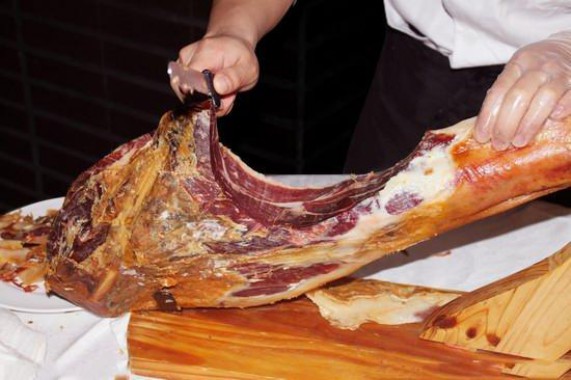
Getting the right ham is just half the battle; how to eat it is crucial. The best way to savor it is slicing and eating it freshly cut, allowing the ham to return to room temperature so the fat melts and the aroma fully releases. Never eat it straight from the fridge as the taste will be much poorer! Thin slices melt in your mouth, bursting with the acorn aroma. Pairing a small piece with bread or a glass of red wine creates an incredible taste experience. Many think the redder the ham, the better, but actually, top-quality ham tends to be darker; in fact, high-fat premium ham has a lighter color and beautiful marbling.
Despite all this, it’s just scratching the surface. The world of Iberian ham is vast, with differences also depending on production areas. Which grade do you usually buy? Do you have any favorite brands or bars where freshly cut ham is especially delicious? Feel free to leave comments below and join the discussion, so this newcomer can also learn more!
