Friends new to Spain must be impressed by the rows of large hams hanging in bars and supermarkets. Every time you want to buy some to try, do you feel a bit lost looking at the diverse names and prices? Today, from the perspective of an ordinary “foodie,” I want to talk about Spain’s national treasure—Jamón Ibérico—hoping to clear up confusion so you can confidently shop next time!
First distinguish: Ibérico and Serrano are not the same
The first basic concept to understand is that Spanish ham mainly comes in two types: Jamón Ibérico and Jamón Serrano. Simply put, Ibérico is made from Spain’s unique black-hoofed pigs, produced in limited quantities, higher priced, and considered the “nobles” of hams; whereas Serrano comes from ordinary white pigs, the most common everyday ham in Spain, with much more affordable prices. So when seeing Spanish Iberian ham production, do not assume all hanging hams are top-quality products—you get what you pay for.
The “ID card” of Iberian ham—Look at the color labels
Even among Ibérico hams, the quality varies widely. To regulate the market, the Spanish government mandates four colors of plastic labels for different Iberian ham grades. Recognizing these labels when buying ensures you won’t go wrong!
| Label Color | Spanish Name | Pig Breed and Rearing Method |
|---|
| Black | 100% Ibérico de Bellota | 100% pure-bred Iberian black pigs, free-range in oak forests, fed on acorns |
| Red | Ibérico de Bellota | 50% or 75% Iberian lineage pigs, free-range in oak forests, fed on acorns |
| Green | Cebo de Campo Ibérico | Over 50% Iberian lineage pigs, pasture-raised, fed grains and natural food |
| White | Cebo Ibérico | Over 50% Iberian lineage pigs, farmed in enclosures, fed only grain feed |
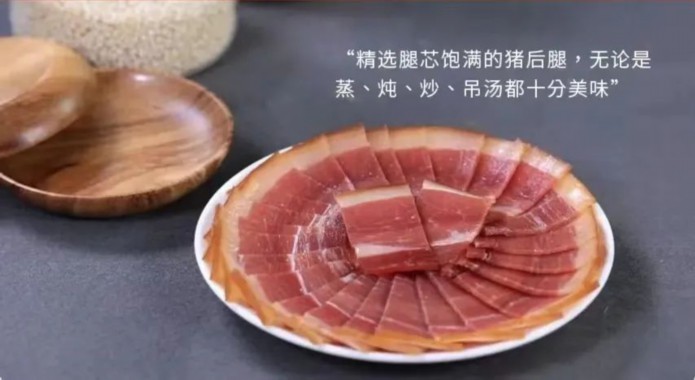
Generally, the black label represents the highest grade, with rich marbling that melts in your mouth and a unique nutty aroma. Of course, it also comes at the highest price. For everyday family consumption, green and white labels offer excellent value for money. If you are buying Spanish Iberian ham as a gift or for a special occasion, then the black or red Bellota level is definitely the showstopper! Remember, the label color determines its value and flavor!
Finally, my personal advice is that if your Spanish ham Iberian beef ham household is small and you lack professional slicing tools or skills, it’s better to buy pre-sliced ham. Although the price per gram is higher than buying a whole leg, this guarantees each slice is paper-thin for the best taste, and avoids the awkwardness of cutting poorly or wasting leftovers. Paired with a glass of Rioja red wine or sandwiched in a toasted baguette, the flavor is unbeatable! Do you have any recommended ham brands or exclusive tasting methods? Feel free to leave your comments below!
