A few days ago, I visited the food section at Harrods and spotted those familiar black hooves again—the 5J ham. The numbers on the price tag made me gasp. Every time I see it, I find myself wondering: why on earth is this so expensive? What exactly distinguishes it from the ordinary Serrano ham sold for just over ten euros per slice in supermarkets? Today, I want to talk with you about the “Rolls-Royce” of Spanish ham.
The term 5J is actually the abbreviation of the brand Cinco Jotas, a household name in Spain for premium ham. When we talk about the “Black Label,” it refers to the highest grade of Iberian ham. The requirements to obtain this Black Label are extremely strict: it must be 100% purebred Iberian black pig, and during the last few months of life, the Spanish black label ham slicing pigs have to be fully free-range in oak forests, feeding only on acorns and natural pastures. This lifestyle elevates the flavor and fat distribution of the meat to a perfect level.
I was fortunate to try authentic 5J Black Label ham at a friend’s home once, and the experience remains unforgettable. The sliced ham had a deep ruby red color, with marbled fat distributed evenly, translucent and pristine. Before tasting, a rich and complex nutty aroma filled the air. Placing a slice on the tongue, hardly any chewing was needed as the fat began to melt with the warmth of the mouth, instantly filling the palate with a sweet, rich, and mellow flavor that lingered long after. This is definitely far beyond ordinary ham!
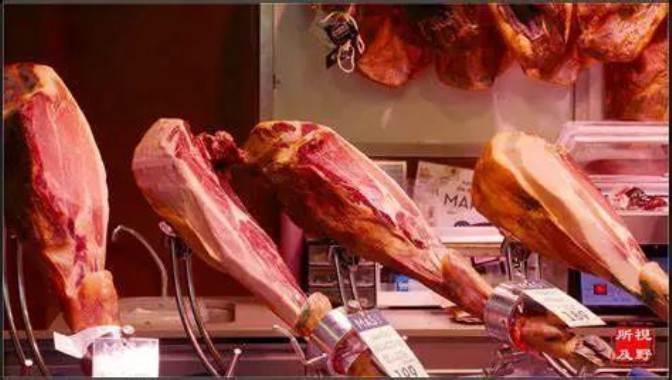
How to Understand Ham Grades?
To help you avoid wasting money, I have prepared a simple Iberian ham grading table. When buying, just check the color of the plastic tag on the hoof:
| Tag Color | Spanish Term | Pig Breed Purity | Feeding Method |
|---|
| Black | 100% Ibérico de Bellota | 100% Iberian | Acorn-fed |
| Red | Ibérico de Bellota | 50% or 75% Iberian | Acorn-fed |
| Green | Ibérico de Cebo de Campo | Over 50% Iberian | Grains + free-range |
| White | Ibérico de Cebo | Over 50% Iberian | Grain-fed |
So, is it really worth the price? Personally, as a Spanish black label ham for everyday meals, it’s certainly unrealistic. However, for important holidays, family gatherings, or hosting guests, buying a leg definitely serves as an impressive centerpiece and allows everyone to experience the finest flavors of Spain. This is a culinary experience, not just food. All expensive things are a tax on intelligence—this phrase might not quite apply to the Spanish 5J Black Label ham here. What do you think? Have any of you eaten or bought 5J ham, or do you recommend other Black Label brands? Feel free to discuss!
