Exploring Spain’s National Treasure: Ham and the Black Pig Story
New arrivals in Spain might feel overwhelmed by rows of ham in the supermarket. Many people, like me when I first arrived, only recognize the most common Spanish black pig ham slices and think the taste is just okay. But today, I want to open a door to a new world and talk about what truly makes Spaniards proud — Iberian ham! This delicacy is in a completely different league from Serrano!
What is the Iberian Black Pig?
The essence of Iberian ham lies first in the pig. It must be made from the Iberian black pig, a breed with noble lineage, black fur, and black hooves. That’s why Spanish black pig ham sausages, nicknamed Pata Negra, are so special. Their standout feature is their ability to evenly marinate the acorn fat into muscle fibers, creating beautiful marbling. This is why top-quality Iberian ham melts in your mouth, while ordinary Serrano made from white pigs lacks this distinctive flavor.
The Ham’s “ID Card”: Understanding Label Colors to Avoid Buying Mistakes
To protect consumers, the Spanish government enforces a strict classification system for Iberian ham, marked by four plastic colored tags hung on the pig’s hoof for easy recognition.
| Tag Color | Spanish Name | Grade | Breeding Method |
|---|
| Black | 100% Ibérico de Bellota | Top | 100% pure Iberian black pigs, free-range feeding on acorns |
| Red | Ibérico de Bellota | Premium | 50%-75% Iberian black pig crossbreeds, free-range feeding on acorns |
| Green | Cebo de Campo Ibérico | Good | Crossbreeds raised outdoors, fed compound feed and natural food |
| White | Cebo Ibérico | Regular | Crossbreeds raised in enclosures, fed only compound feed |
So when you next go to the supermarket or ham shop, don’t just look at the price — Spanish black pig ham production, check the small tag on the pig’s hoof! Black and red tags indicate legendary acorn-fed hams, offering the richest flavors and highest prices. Green and white tags are more affordable, suitable for everyday indulgence. As for Jamón Serrano, it’s made from ordinary white pigs, outside this system, and is much cheaper. Stop mistaking Serrano for Iberian ham!
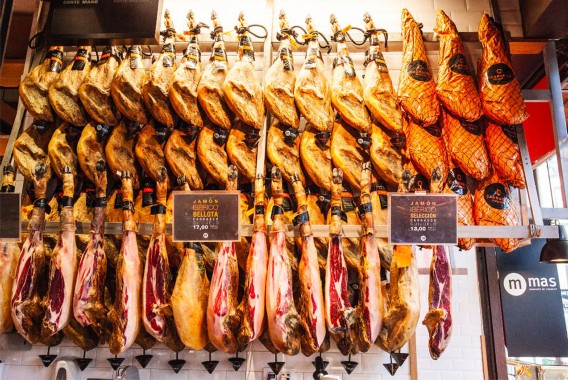
The best way to enjoy it is freshly sliced, paper-thin, eaten by hand so you can savor the fat melting on your tongue. Pair it with a glass of red wine or just simple Pan con Tomate — the taste is unbeatable! No complicated cooking needed; its original flavor is the highest tribute.
After all this talk, my mouth is watering. What price range of ham do you usually buy? Do you have any treasured ham shops or brand recommendations? Feel free to share in the comments and let’s make life in Spain even more flavorful!
