For those newly arrived in Spain, every time we talk about food with friends, one classic question always comes up: “They say the Iberian black pig is a national treasure, but between the live pig itself and the entire leg of ham we see in stores costing hundreds or even thousands of euros, which one is more expensive?” This question sounds a bit like the “chicken or the egg” dilemma, but actually the answer is very clear, and there is a lot behind the Spanish black pig ham slices.
To be direct: the price of finished ham is far higher than that of the live pig itself. To put it simply, the most valuable parts of a top-grade Iberian black pig are its two hind legs, and after these legs are processed into ham, their combined value can even exceed the original price of the whole pig. This may sound incredible, but it makes perfect sense. We can’t just view the pig and the ham as raw material and finished product; there is a long and costly “value-added” process in between.
The “Value-Added” Journey from Pig to Ham
First is the time cost. A top-grade Iberian acorn-fed ham, from piglet birth to the final product ready for sale, can take up to Spanish black pig chorizo 5 years in total! During this time, the pig’s fattening period on acorns at the Dehesa farm lasts only a few months, but after slaughter, the curing and aging process for the ham requires at least 24 to 48 months, or even longer. The storage, labor, and controlled temperature and humidity over these years are all real costs.
Next are the massive weight loss and technical costs. A fresh pig hind leg loses almost half its weight during production due to water loss! This does not even include trimming of fat and waste. Check this simple comparison:
| Stage | Weight | Description |
|---|
| Live pig | 160 kg | An adult Iberian pig |
| Fresh hind leg | 15 kg | Single hind leg, untreated |
| Finished ham | 8-9 kg | After 2-4 years of drying and aging |
Nearly 50% of the weight simply “dries away.” Moreover, the entire process requires experienced ham masters who carefully control salt levels and drying times based on weather and the leg’s condition. This craftsmanship is the core of the ham’s value. It’s not something you can just hang anywhere for a quick Spanish black pig ham production process, otherwise everyone would be making their own at home.
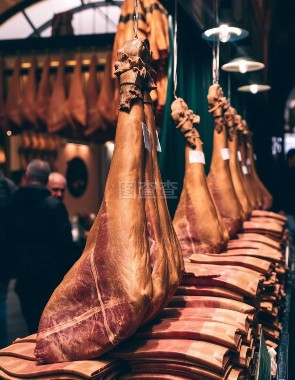
So, when we buy ham, we are not just buying that piece of meat. We are purchasing the superior genetics of the Iberian black pig, the unique ecosystem of the Dehesa farm, the flavors developed over a long period of time, and the exquisite craftsmanship passed down through generations of ham masters. Each link in this chain adds value that culminates in that wafer-thin, melt-in-your-mouth slice of ham. Next time someone asks this question, you can tell them the reason ham is expensive is that it’s no longer just a pig, but an artwork nurtured by time and skill. Do you think this price difference is reasonable? What is the best ham you’ve eaten in Spain? Let’s talk!
