For those newly arrived in Spain, do you feel a bit overwhelmed every time you walk past the ham section at supermarkets? Rows of shiny, large hams with price tags ranging from tens to over a thousand euros! The price gap is staggering. Today, let’s talk about Spain’s national treasure—Jamón Ibérico—and unravel where the price differences come from.
First, it’s important to clarify one big premise: there are two main types of Spanish ham. One is the ordinary Jamón Serrano, made from white pigs; the other is the famous Jamón Ibérico, made from Spain’s unique black-hoofed pigs. The pig breed alone sets the base price at very different levels. Serrano is relatively affordable; today, we focus on the more complex pricing of Ibérico.
Iberian Ham Grades and Prices
The price of Iberian ham mainly depends on two factors: the purity of the pig’s bloodline and the pig’s rearing method. Bloodline purity is classified into 100% Ibérico, 75% Ibérico, and 50% Ibérico. The rearing method is even more critical, directly determining the ham’s flavor and price. Different colored labels denote these methods, and the price varies dramatically.
The following table summarizes this clearly:
| Label Color | Spanish Name | Rearing Method | Flavor and Price |
|---|
| Black | Bellota 100% Ibérico | 100% purebred black pig, fully free-range in oak forests during acorn season, eating only acorns and natural food | Top-tier king, most complex flavor, rich and sweet aroma, most expensive |
| Red | Bellota Ibérico | 50% or 75% crossbred black pig, also free-range during acorn season eating acorns | Excellent quality and value option, high price |
| Green | Cebo de Campo Ibérico | Crossbred black pig, partially free-range in fields or farms, eats feed plus natural food | Good taste with some natural flavor, moderate price |
| White | Cebo Ibérico | Crossbred black pig, farmed indoors, fed only grains and legumes | Entry level, less fatty aroma, most affordable |
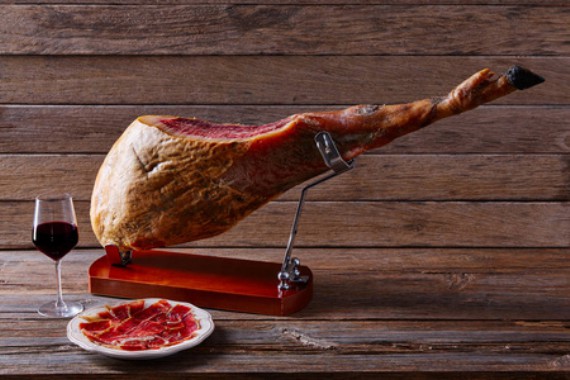
So how much do Spanish Iberian black pork ham slices actually vary in price? For example, a whole leg weighing 7-8 kg: the entry-level white label Cebo often costs around €150-250; the green label Cebo de Campo is about €250-400; the red label Bellota starts around €400-600; and for the top-tier black label 100% Bellota, there’s no upper limit, generally ranging from €600-1200 or more, with some aged or special region hams reaching astronomical prices! If buying packaged 100g slices of Spanish Iberian black pork sausages, Cebo costs about €7-10, while top-tier black label 100% Bellota can easily sell for over €25-40.
In short, in the world of ham, you basically get what you pay for. If you are new to trying it, start with the green label Cebo de Campo, which offers a good taste of Iberian ham with excellent value. Of course, if your Spanish Iberian ham preparation budget allows, going straight for the top black or red labels opens the door to a new world of experience! Which type of ham have you tried? Any recommended brands or pitfalls? Feel free to share your thoughts and questions below!
