Since arriving in Spain, one of life’s great pleasures has been enjoying delicious Jamón anytime, anywhere! Whether it’s as tapas paired with wine or tucked inside a bocadillo for breakfast, it’s truly a culinary delight. Recently, I’ve started paying more attention to body management, and a pressing question emerged: Is Spanish ham high in calories? If I eat it every day, will I quietly gain weight? I’m sure many share the same concern, so I did some research on customized Spanish ham calories and would like to share it with you today.
First, it’s important to understand that Spanish ham is not a uniform category. The two most common types are Jamón Ibérico and Jamón Serrano. They differ in the breed of pigs used, feeding methods, and production processes, so their calorie and nutritional profiles naturally vary. In short, Ibérico comes from Iberian black-hoofed pigs, while Serrano comes from white pigs; generally, the former is pricier and considered higher quality.
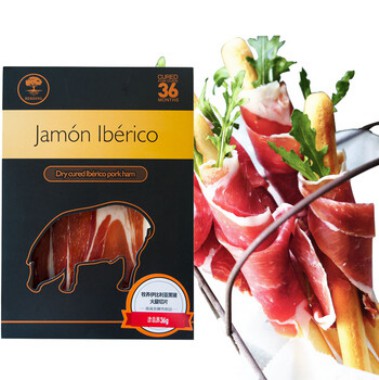
Jamón Ibérico, especially the highest grade “acorn-fed” variety, is known as the “walking olive tree.” This nickname comes from black-hoofed pigs roaming freely and feeding heavily on acorns, resulting in a unique fat composition rich in oleic acid, which is a calorie component of Spanish ham monounsaturated fat—the same healthy fat found predominantly in olive oil. So although its fat content isn’t low, it mainly consists of “good fats” that are beneficial for cardiovascular health. By comparison, Serrano ham has overall lower fat content but a slightly higher proportion of saturated fats.
Quick Reference: Jamón Calories and Nutrition
To provide a clearer comparison, here’s a simple table with average values per 100 grams. Actual figures vary by brand and cut, but this serves as a helpful post-Spanish ham calorie reference:
| Item | Jamón Ibérico | Jamón Serrano |
|---|
| Calories | About 350 - 450 Kcal | About 200 - 300 Kcal |
| Protein | About 30 - 40 g | About 30 - 35 g |
| Fat | About 25 - 35 g | About 10 - 20 g |
| Main Fat Type | Primarily monounsaturated fat | Mixed saturated and unsaturated fats |
From the table, you can see that Jamón Ibérico does have higher calories, mainly due to its richer fat content. However, it’s also an excellent protein source. Serrano ham, on the other hand, is relatively “lower-calorie,” making it more suitable for those strictly controlling calorie intake.
So, what’s the conclusion? My take is that moderate enjoyment is perfectly fine! You don’t need to completely avoid it while dieting. The key lies in “moderation” and “choice.” For example, choosing Serrano ham with relatively lower fat content or consciously trimming off the thick white fat edges when eating Ibérico can make a difference. Discussing calories without considering portion size is unscientific. How do you usually enjoy ham? Any low-calorie yet tasty pairings to recommend? Feel free to join the discussion below!
