Having been in Spain for a while, every time I taste that rich and savory bite of Iberian ham at a restaurant or a friend’s house, I feel it’s truly worth it. After hesitating for half a year, I finally bit the bullet and brought home a whole Jamón Ibérico! The process was both exciting and challenging. Today, as an ordinary foodie, I want to share the entire journey from selection to slicing, hoping it helps those equally tempted.
How to Choose a “Good Ham"
At first, it was really overwhelming with all the different brands and prices. Later, after some research, I learned the most crucial factor is the color of the plastic label hanging on the ham leg, which directly indicates the ham’s grade. Simply put, this is an official certification, more reliable than any brand advertisement. I compiled a simple Spanish whole ham recommendation table to help everyone understand:
| Label Color | Breed and Rearing Method |
|---|
| Black | 100% pure Iberian black pig, free-range in the dehesa oak forest, fed on acorns. Top grade! |
| Red | 50%-75% Iberian pig bloodline, free-range in the dehesa oak forest, fed on acorns. Also very high quality. |
| Green | Over 50% Iberian pig bloodline, free-range, but diet is a mix of grains and acorns. |
| White | Over 50% Iberian pig bloodline, farm-raised, fed only on grains. |
This time, I chose the red label when buying a whole ham in Spain because the black label ones are just too expensive—my wallet wouldn’t allow it . However, the red label’s taste and flavor are already stunning. Regarding brands, like Cinco Jotas and Joselito are top tier, but I picked a local small farm brand from Salamanca region, which offers great value for money without sacrificing taste.
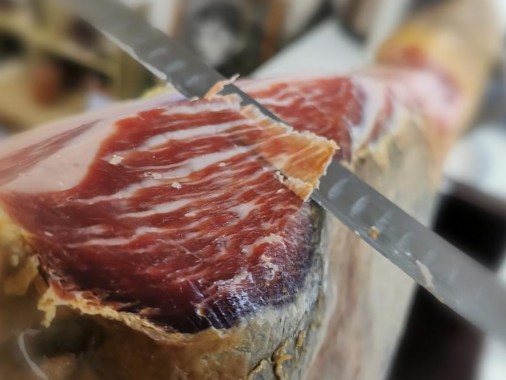
Slicing the ham is truly an art. Don’t even think about cutting it directly with a regular kitchen knife—learned the hard way! You must have a proper set of tools: a sturdy ham holder and a set of long and short ham knives. At first, I struggled with control over force and angle and ended up with chunks rather than thin slices. After days of practice, I gradually managed to cut wafer-thin slices with evenly distributed fat. That moment felt incredibly fulfilling!
Finally, about storage. When you buy a whole ham unopened, just hang it in a cool, ventilated place—it can last for one to one and a half years without problems. Once you start slicing, moisture retention is key. The best way is to cover the cut surface with a thick layer of the first removed fat, then cover it with a clean cotton cloth or kitchen paper to prevent drying. Never use cling film, as it suffocates the ham and changes its flavor. Usually, after opening, it’s recommended to finish within 1-2 months for optimal taste.
Though the initial investment is a bit high and a whole 5J Spain ham requires effort, every day after work, slicing a few pieces of ham with a glass of red wine brings immense satisfaction, truly worth it! I strongly recommend it to every food lover. Have you ever bought a whole ham? Feel free to share your experience below and recommend better brands!
