If you have recently arrived in Spain or it’s nearly Christmas or a birthday, many people will receive or want to buy a whole ham as a gift, such as a whole Spanish ham recommendation. Looking at that huge leg, you might feel both excited and a bit overwhelmed: how do you even start? Don’t worry, today we’ll talk about the entire process from selection to carving, so after reading, you’ll know exactly what to do!
Step One: Choose the Right Leg – Iberian or Serrano?
These two are the most common hams in Spain, with big differences in price and flavor. Simply put, Iberian ham comes from black-hoofed pigs, is richly marbled with fat, has a more aromatic and mellow taste, and is more expensive. Serrano ham comes from white pigs, contains less fat, tastes saltier and more straightforward, and offers good value. For beginners looking to buy a whole Spanish ham, it’s recommended to start trying Serrano or Iberian ham at the Cebo grade level.
| Feature | Iberian Ham | Serrano Ham |
|---|
| Pig Breed | Iberian Black-Hoofed Pig | Common White Pig |
| Hoof Color | Mainly Black | Mainly White |
| Flavor | Nutty aroma, rich and smooth | Saltier, direct meat flavor |
| Price | Higher | Affordable |
Step Two: Unbox! Check if your equipment for the whole 5J Spanish ham is complete
A complete ham gift box usually includes more than just the leg itself. It typically comes with a special ham stand and a set of carving knives. The ham stand is essential to secure the ham because without it, the leg can wobble dangerously while cutting. The carving knife is long, thin, and very flexible, which is key for slicing ultra-thin ham pieces. Upon receiving it, first check whether these two items are included.
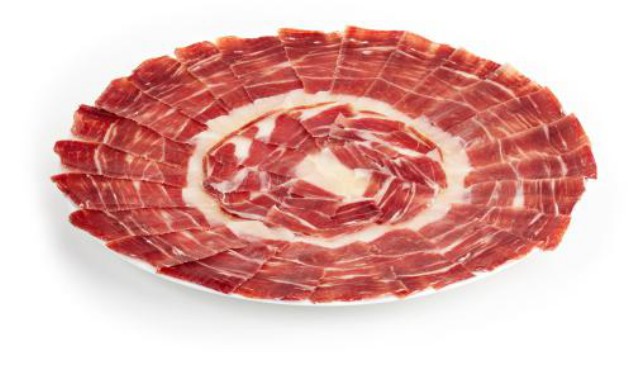
Step Three: Start Carving! The Exciting Moment
Secure the ham on the stand with the hoof facing upwards, then start slicing from the thinner back leg part. Use a short knife to remove the outer layer of yellow fat and hard skin until you see the red meat. Then switch to the long knife and keep the blade horizontal, gently sliding back and forth to carve semi-transparent thin slices. Remember, safety first—if you’re not skilled, take it slow and keep your hand behind the knife!
What if You Can’t Finish It? Proper Storage is Key
A ham this large definitely can’t be finished in a day or two. After each carving session, cover the cut surface with the large piece of fat you just sliced off to prevent dryness and oxidation. Then wrap it with cling film or cover it with a clean cloth. Store it in a cool, ventilated place, and never put it in the fridge! Refrigeration will cause the ham to lose flavor. Hope this sharing is helpful! What brand of ham do you like? Feel free to leave comments below for discussion!
