Many friends who have just arrived in Spain, probably like me, were shocked by the imposing whole ham legs hanging in a row at the supermarket. On a whim, they bought a whole leg to take home. Whether it is Serrano or Ibérico, the excitement was overwhelming! But after the joy, a new question arises: How do you start eating this thing?
Don’t rush, this is definitely a sweet burden. To elegantly enjoy this leg, preparation is essential. First, you need a dedicated ham holder that can firmly secure the ham, making it easier to carve. Second, you need a set of ham knives, usually including a long, narrow slicing knife, a short boning knife, and a wide blade knife for peeling skin and fat. Believe me, good tools are definitely half the success.
The First Cut: Where to Start?
Fix the ham on the holder, usually with the hoof facing up. This way, you first taste the juiciest and fattiest part—the Maza. First, use the wide blade knife to shave off the hardened yellow fat on the outer layer. Note that you shouldn’t remove it all at once; only shave off what you plan to eat that day. The remaining skin and fat protect the meat inside from drying out. Then use the long slicing knife, keeping it horizontal, to gently slice thin and long slices of ham. The ideal thickness is translucent, allowing you to see the shadow of the blade.
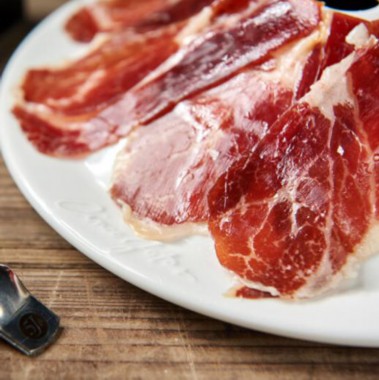
Different parts of one ham have distinct flavors and textures. Understanding these helps you eat like a pro. Here is a simple compilation on Spanish whole ham recommendations and a breakdown of buying whole ham in Spain:
| Part | Characteristics | Recommended Eating Method |
|---|
| Maza | Most meat, evenly marbled fat, tender and juicy | Eaten raw, paired with bread or melon |
| Babilla | Less fat, firmer meat, more concentrated flavor | Also eaten raw, slice thinner due to leanness |
| Punta | Located at the other end of Maza, high fat content, savory taste | Rich flavor, favorite of many connoisseurs |
| Jarrete / Codillo | Near the hoof, fibrous texture, chewy | Suitable for cutting into small pieces, paired with wine or used in cooking |
How to store leftover ham? Remember, never wrap the cut surface directly with cling film, as it will produce off-flavors. The correct method is to cover the cut surface with a large piece of the white fat you just shaved off, then cover it with a clean, breathable cotton cloth. Store at room temperature in a cool, ventilated place. Also, don’t throw away the last bone; chop it into pieces for making broth. The soup base will be incredibly flavorful, definitely the essence of it all! Hope everyone enjoys their “leg” to the fullest!
