Having been in Spain for quite some time, every time I pass by a ham shop I feel so tempted I can hardly move. I’ve always been thinking about when I could boldly bring home a whole ham. Last week I finally couldn’t resist and carried a Jamón Serrano home! I have to say, having a big ham displayed at home gives such a sense of security! But then the question arises: how exactly do you get started with such a big piece?
Preparation Before Opening the Ham
As the saying goes, “A workman must first sharpen his tools.” Before you “cut” into your ham, a set of professional tools is indispensable. Don’t even think about using a fruit knife or a Chinese cleaver — that would be a disaster. At minimum, you need these three things:
- Ham Stand: to securely hold the ham so you can slice safely and steadily.
- Jamón Knife: a long, flexible blade that is essential for slicing wafer-thin ham slices.
- Sharpening Rod: to keep the blade sharp during slicing.
Slicing and Tasting
Secure the ham on the stand with the hoof facing upwards, and start slicing from the fullest part. First, use a short knife to remove the outer yellowish, bitter fat and hardened skin until you reveal the pink ham meat with marbled fat. Then switch to the long knife, keep your wrist flat, and use a sawing motion to gently slice long, thin slices of ham. Remember, it has to be thin! Experts cut their slices so thin they are semi-transparent and melt in your mouth.
Here is a simple comparison of the textures from different parts of the ham from Whole Spanish Ham Recommendations:
| Part | Characteristics | Taste |
|---|
| Main Leg Maza | Most meat, rich fat | Fresh and juicy, with rich aroma like Whole 5J Spanish Ham |
| Secondary Leg Babilla | Less fat, firmer meat | Chewier, concentrated flavor |
| Shank Jarrete | Near the hoof, lots of tendons | Unique texture, suitable for stewing or risotto |
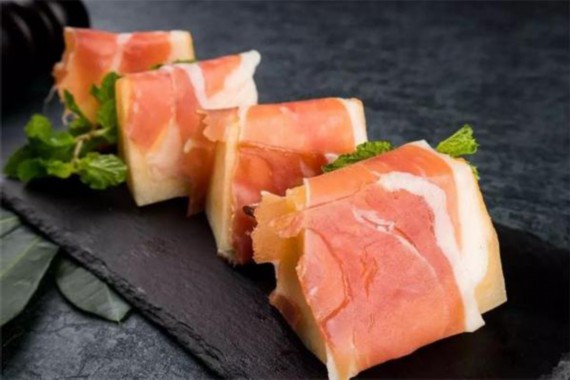
The freshly cut ham slices carry the aromas of acorns and time. Place one directly in your mouth and let its fat slowly melt on your tongue — the taste is simply amazing! Paired with a glass of Rioja red wine or some slices of melon, it’s a classic way to enjoy it. My personal favorite is still putting it inside a freshly baked baguette — simple yet satisfying.
How to store leftover ham? This is a big question addressed in Buying Whole Ham in Spain. Do not put it in the fridge! The right way is to cover the cut surface with the white fat slices you just cut, then wrap it with plastic wrap or directly cover it with a clean cotton cloth, and place it in a cool, ventilated area. This keeps the cut surface moist and prevents it from drying out. I hope my experience helps everyone, and I also welcome fellow ham enthusiasts to share their thoughts!
